London Euston
March.2026
Read Article
↓
↓
Overview
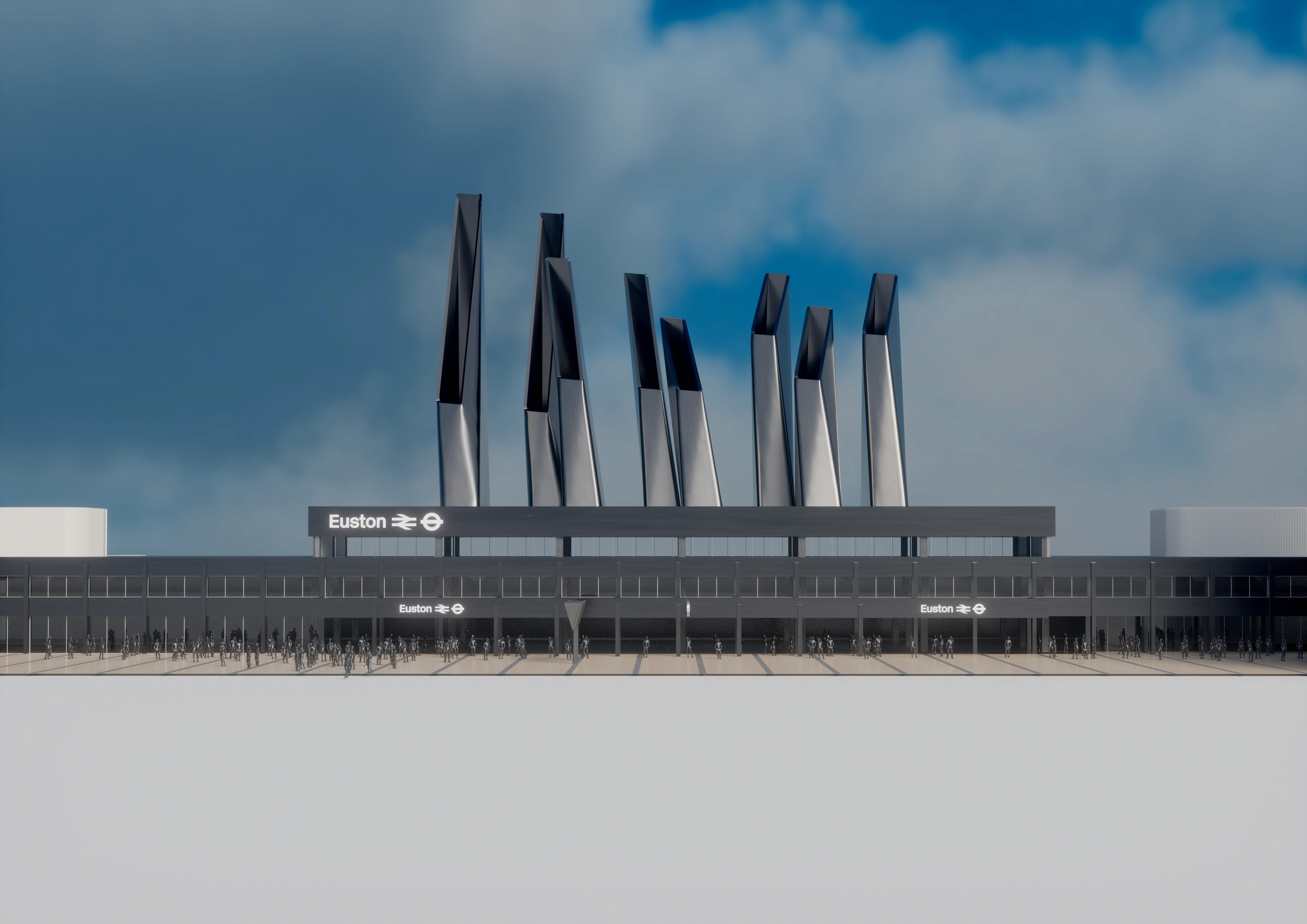
Euston Station Concourse Roof Concept
Something about London Euston station is aesthetically terminal. For one of the capital’s primary gateways, the experience of arrival feels curiously flat, dim, and underwhelming. The concourse, shaped by its 1960s origins, is efficient in plan but lacking in generosity. It is low, dark, and inward looking, offering little sense of welcome or occasion to those arriving from some of the UK’s most important cities. It works, but it never quite arrives.
This design concept begins from a position of respect rather than rejection. The existing structure has clarity, discipline, and a certain quiet confidence. Its clean lines and horizontal logic are worth keeping. The issue is not what it is, but what it never quite became.
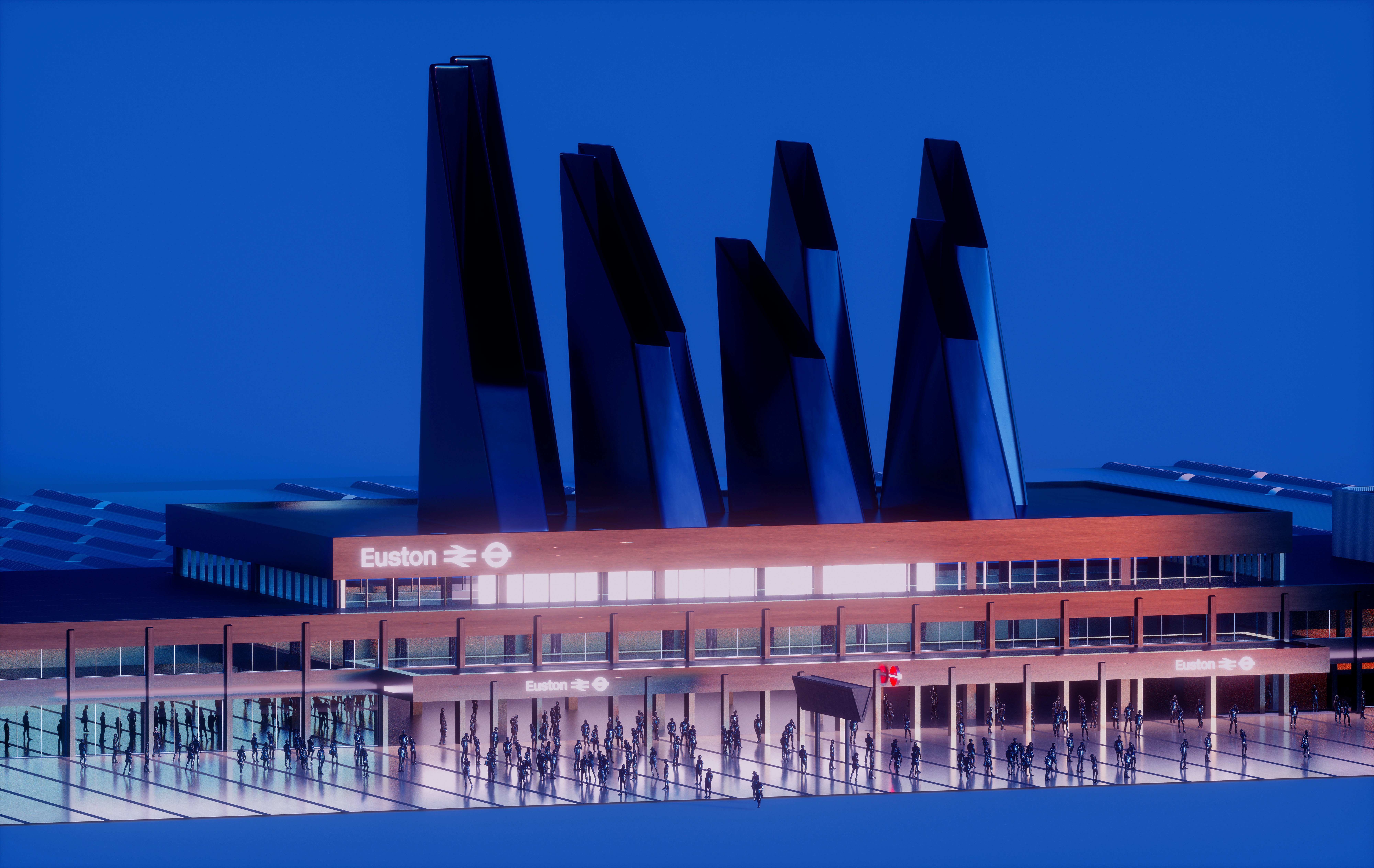
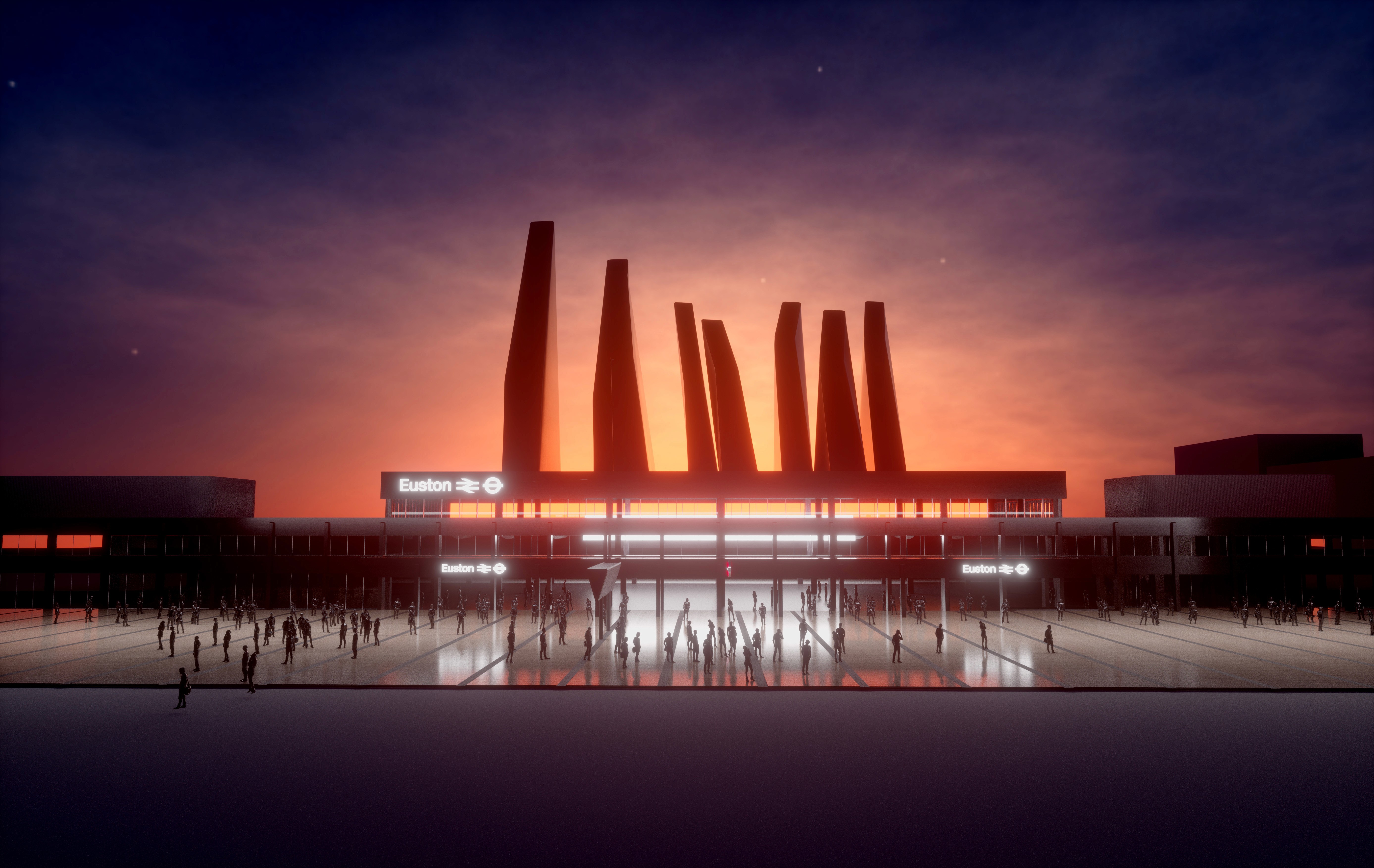
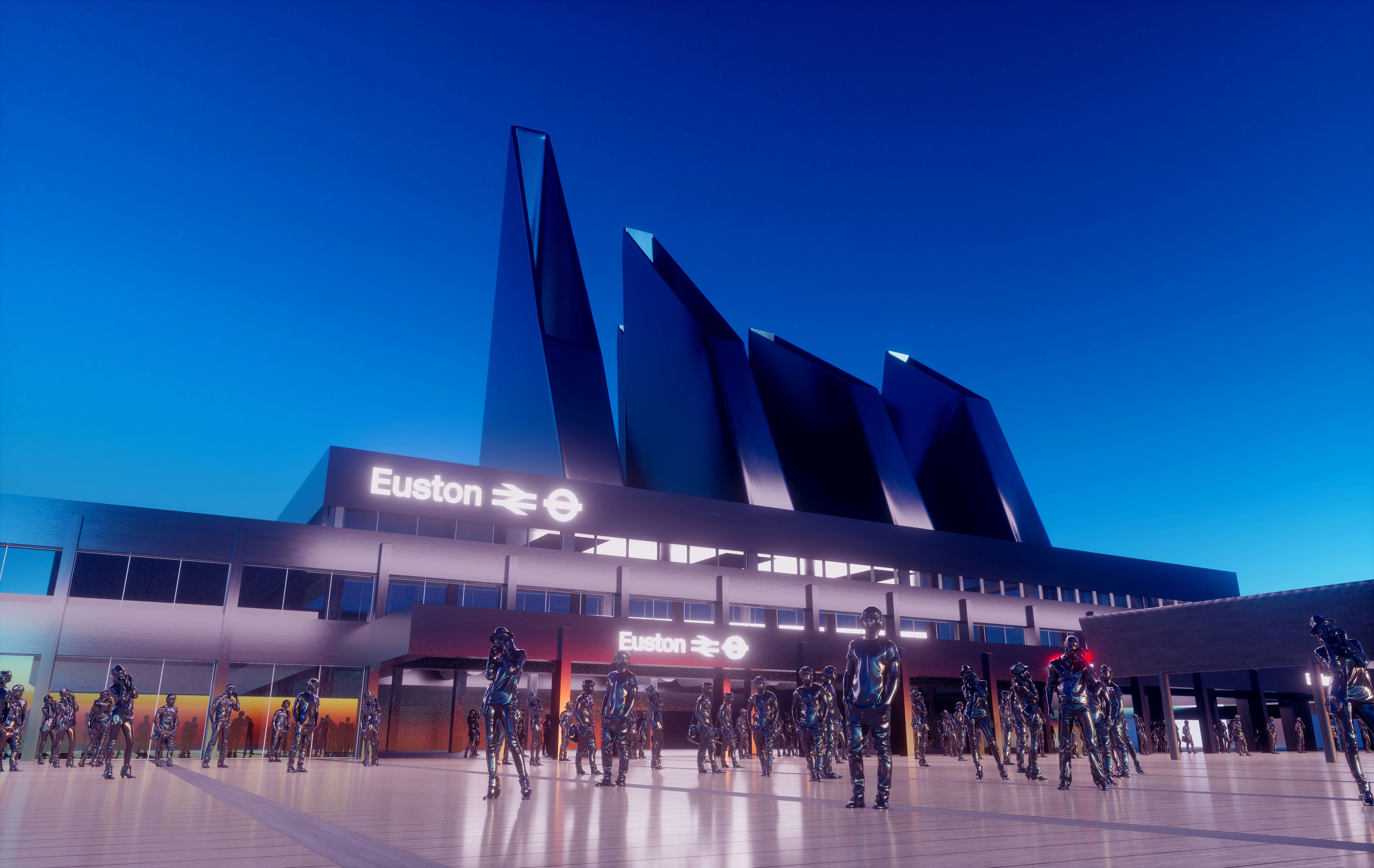
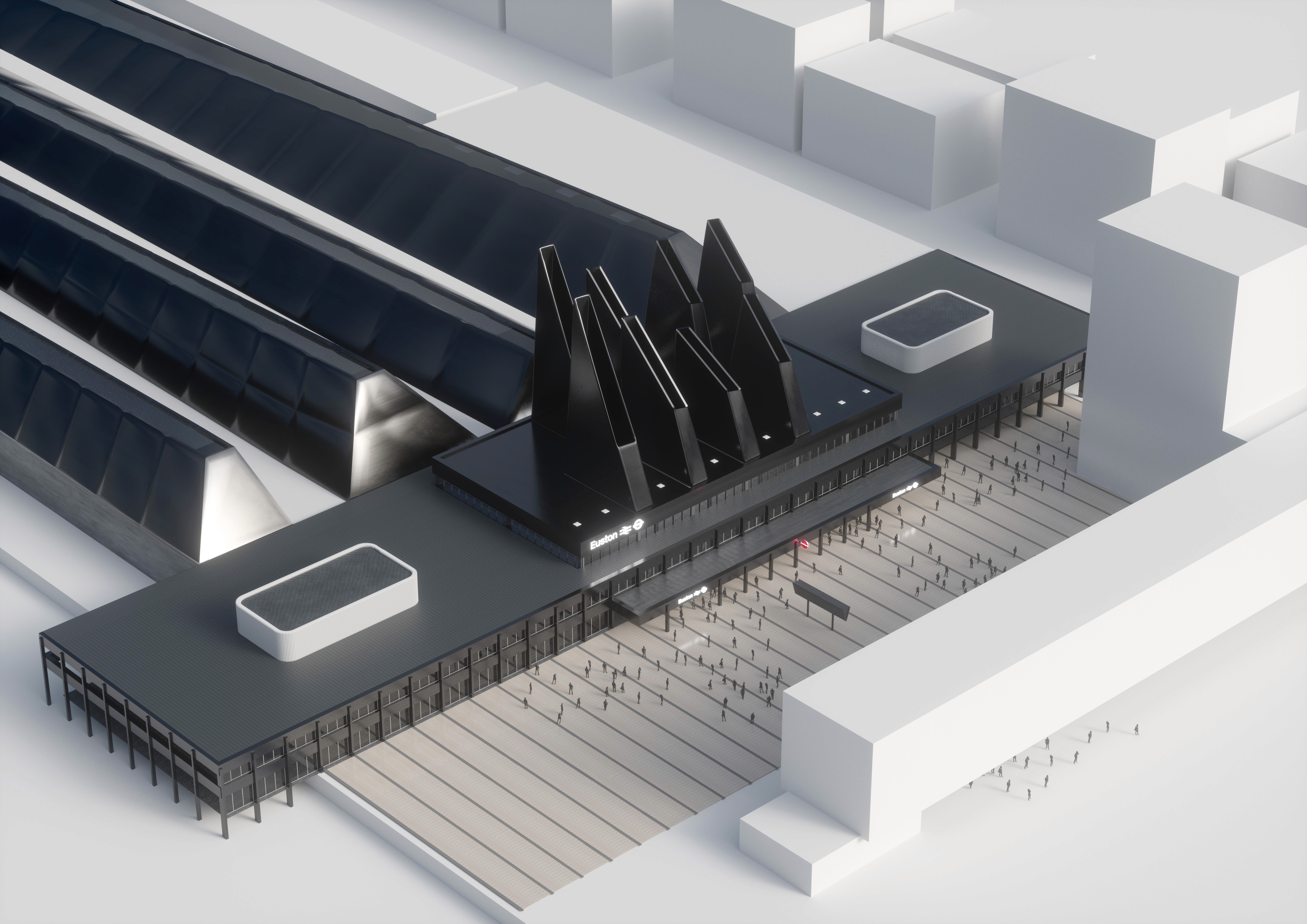
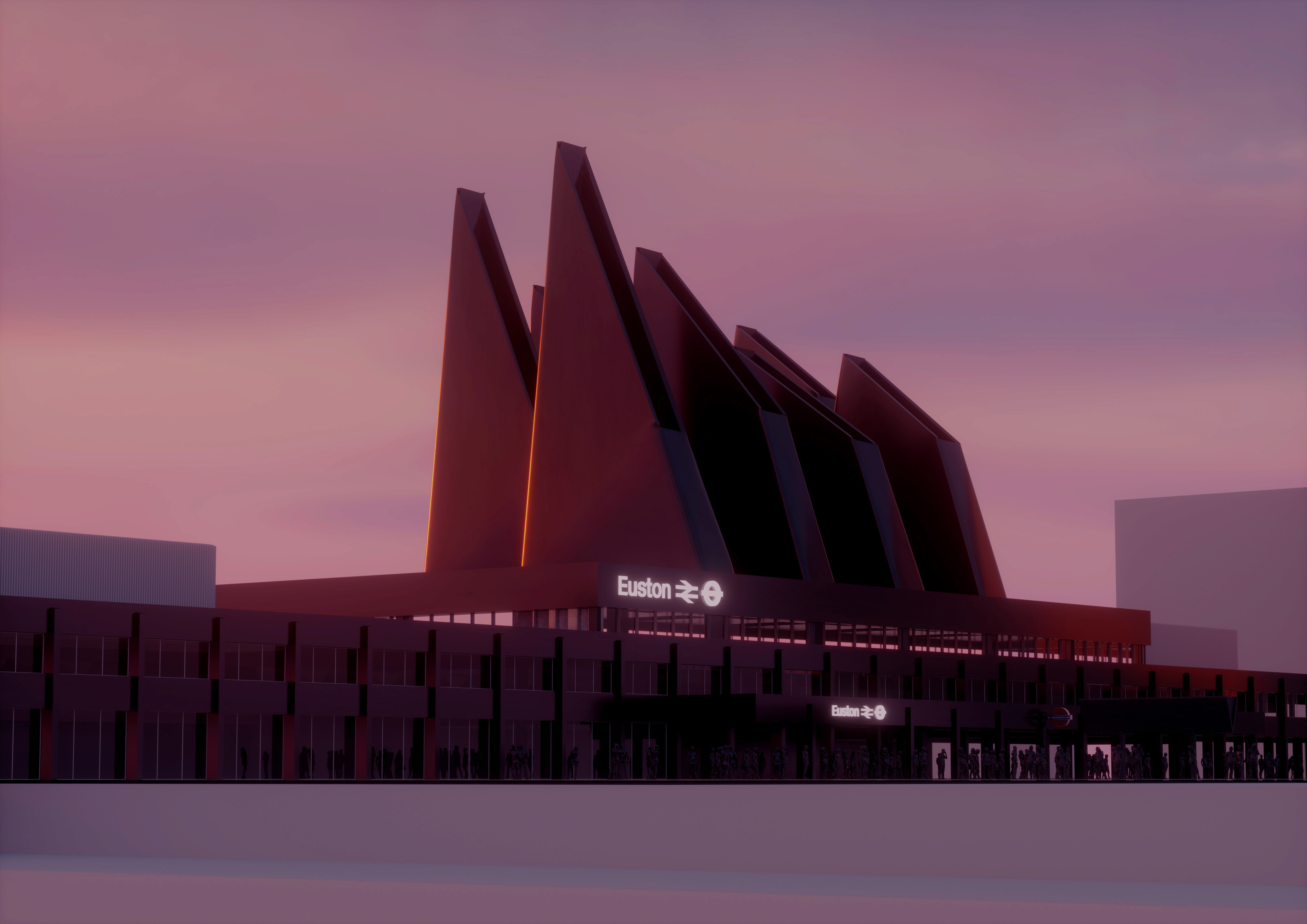
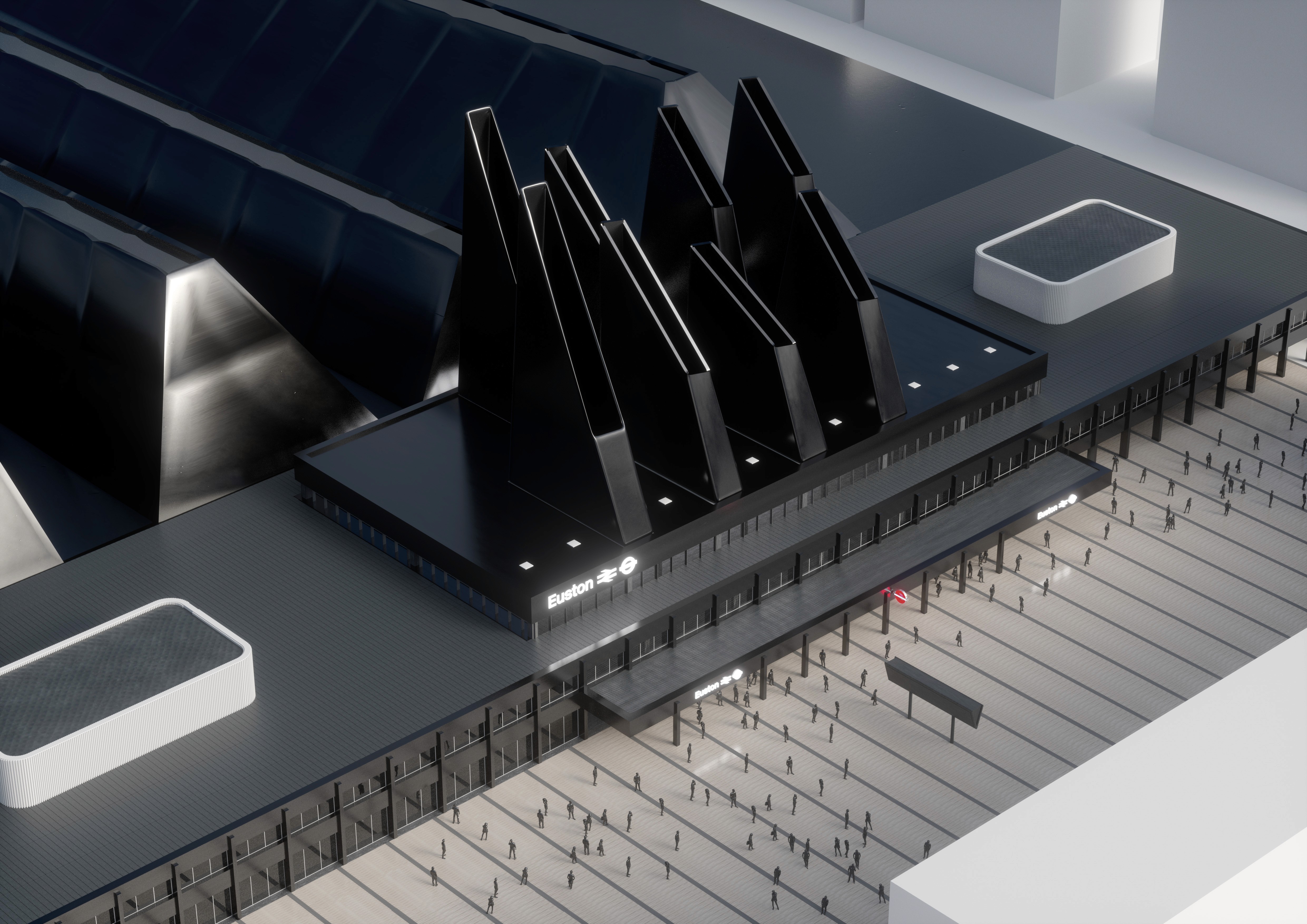
The proposal introduces a series of tall, abstract light funnels across the concourse roof. These elements extend the black, glossy language already present in recent upgrades, but push it further, transforming surface treatment into architectural intent. Rising from the flat roof plane, the funnels appear as sculptural, monolithic forms, giving the station a renewed presence and identity on the skyline. They are deliberately simple, controlled, and slightly enigmatic. Objects that suggest something is happening, even before you step inside.
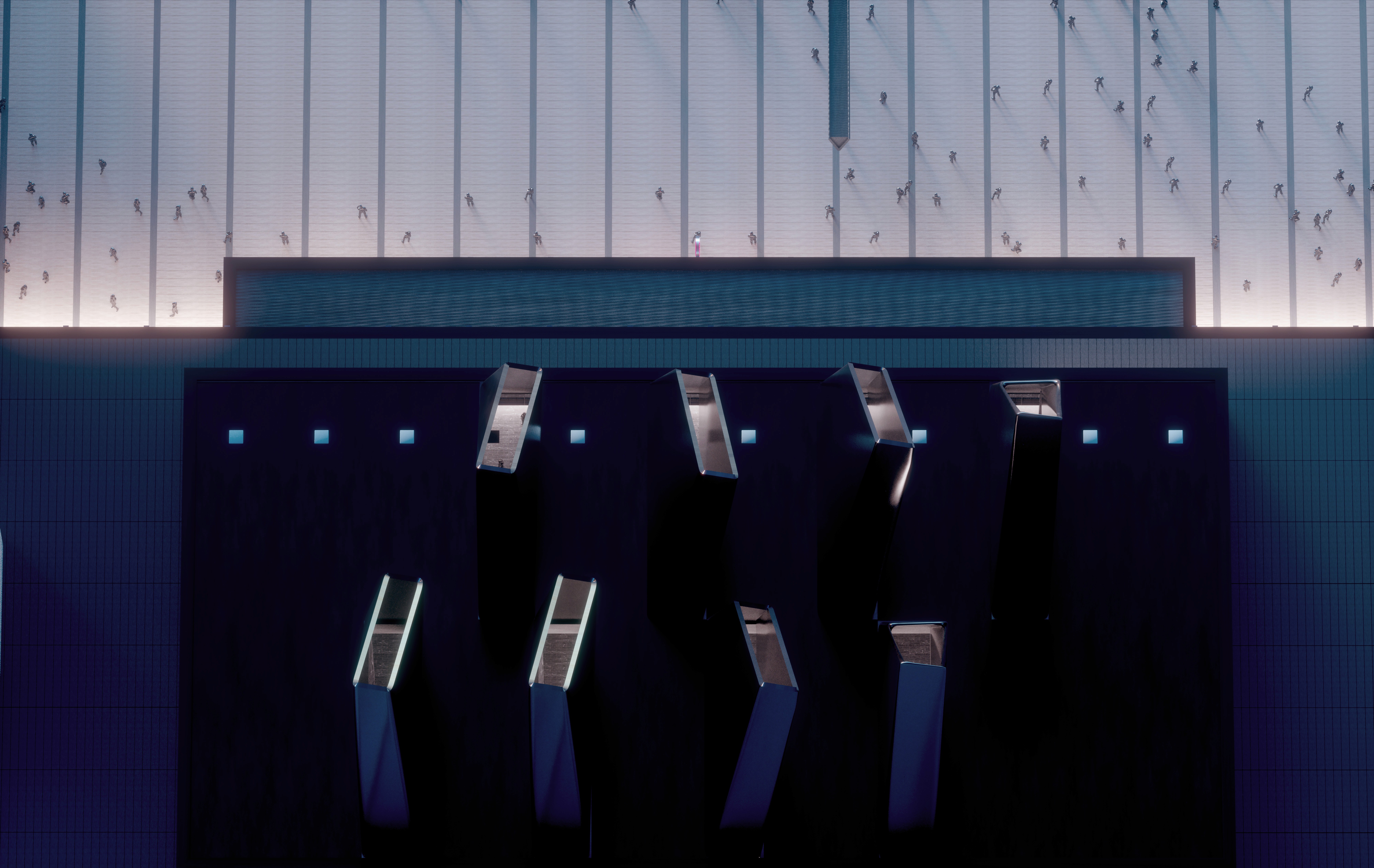
Inside, the effect is reversed. The funnels are lined with a pale, reflective material, echoing the light tones of the station’s original flooring. Rather than absorbing light, they capture it, drawing daylight down into the concourse and releasing it as a soft, luminous wash. The result is not a complete overhaul, but a series of carefully placed moments where the space opens up, brightens, and breathes.
Structurally, the intervention is intentionally light. The funnels are conceived as composite or aluminium shell structures, minimising additional load on the existing roof. Their placement is guided by the underlying structural grid, allowing loads to be distributed across the concrete soffits without the need for major reconstruction. Openings are introduced selectively, with localised reinforcement, ensuring that the proposal works with the building rather than against it.
Beyond the concourse, the roof is reconsidered as a more permeable surface. Targeted openings and light channels allow daylight to reach further into the platform areas and across the tracks, softening the transition between arrival hall and railway. The station begins to feel less like a sealed container and more like part of the city.
This is not a proposal that seeks to erase Euston’s past. It accepts its constraints, its logic, and even some of its stubbornness. But it also recognises that a station of this scale should offer more than function alone. Through a small number of precise interventions, the building is given height, light, and a sense of occasion. Less a complete reinvention, more a long overdue awakening.
SHARE ARTICLE