EON
July.2026
Read Article
↓
↓

Overview
English Opera North: Liverpool
A national cultural landmark for a global city
For generations, Liverpool has earned its reputation through culture. Music, architecture, performance and creativity have shaped the city's identity and projected it onto the world stage, yet it remains without a contemporary cultural landmark capable of representing that ambition for the twenty-first century.
English National Opera Liverpool reimagines what a national arts institution could become. More than a performance venue, it is conceived as a civic destination where opera, education, public life and creative industries coexist beneath a single architectural canopy. Positioned on the former Canning Place Police Headquarters site, the proposal transforms a prominent brownfield plot into an open cultural campus that reconnects the city centre with the waterfront while creating a new landmark on Liverpool's skyline.
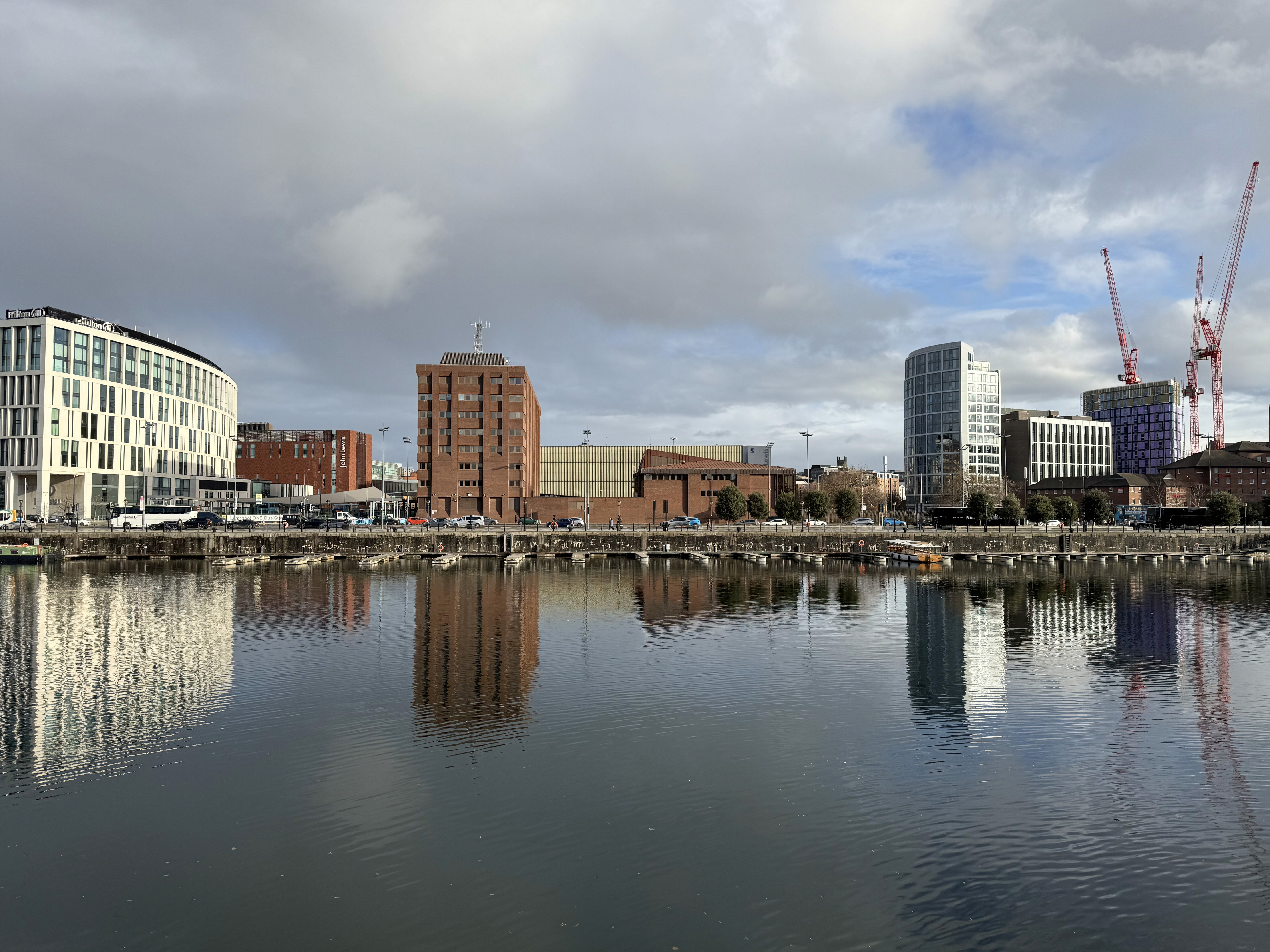
Reclaiming a pivotal site
The former police headquarters occupies one of Liverpool's most strategically important yet underutilised locations. It sits between Liverpool ONE, the Royal Albert Dock, Ropewalks, Mann Island and the emerging Baltic Triangle, acting as a physical threshold between some of the city's most visited destinations.
Rather than replacing one civic institution with another closed building, the proposal opens the site to the public for the first time in decades. New routes, public squares and landscaped spaces encourage movement through the site, transforming what was once a place of authority into one centred on creativity, learning and participation.
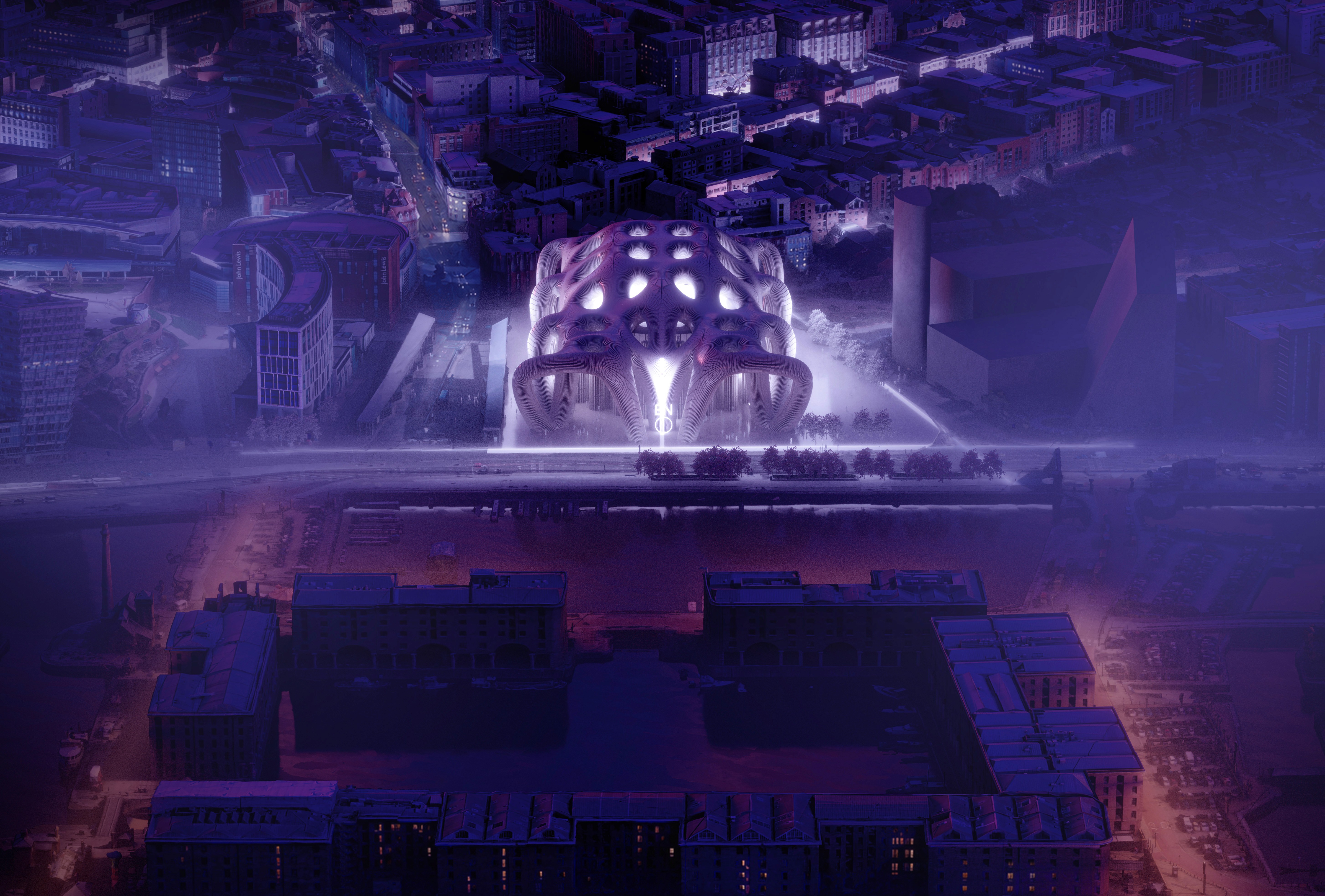
Base model image generated by Google.

Base model image generated by Google.
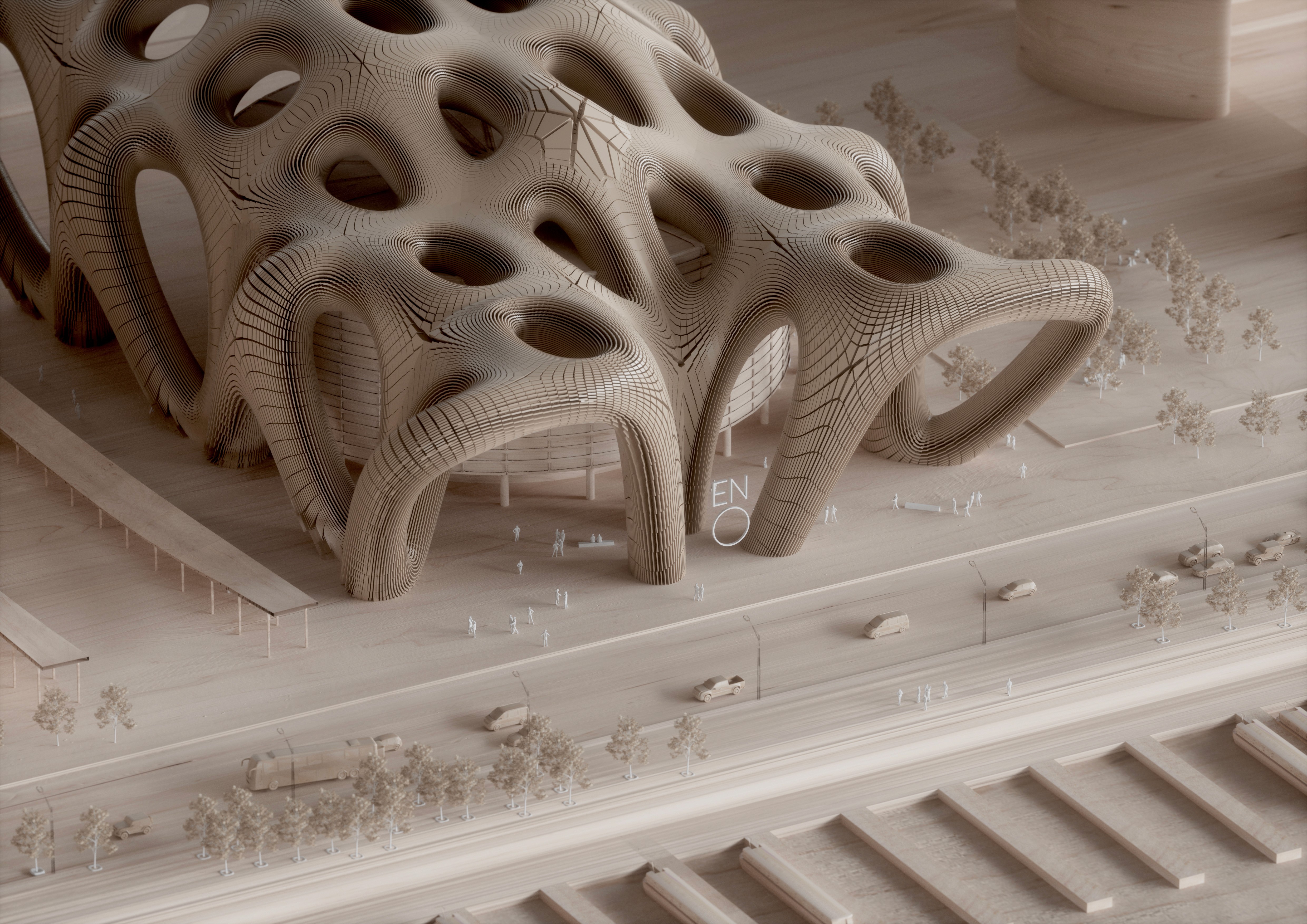
More than an opera house
The auditorium forms only one component of a much broader programme. The building is designed to remain active from morning until late evening, serving residents, visitors, students and performers alike.
Alongside the main performance venue, EON Liverpool accommodates a flexible theatre for contemporary productions, rehearsal studios, recording facilities, exhibition galleries, education spaces, restaurants, cafés and publicly accessible terraces overlooking the Mersey. A large internal winter garden provides a sheltered civic space throughout the year, while creative workspaces support artists, designers and cultural organisations working alongside the national company.
The result is a building that generates activity every day rather than only during performances.

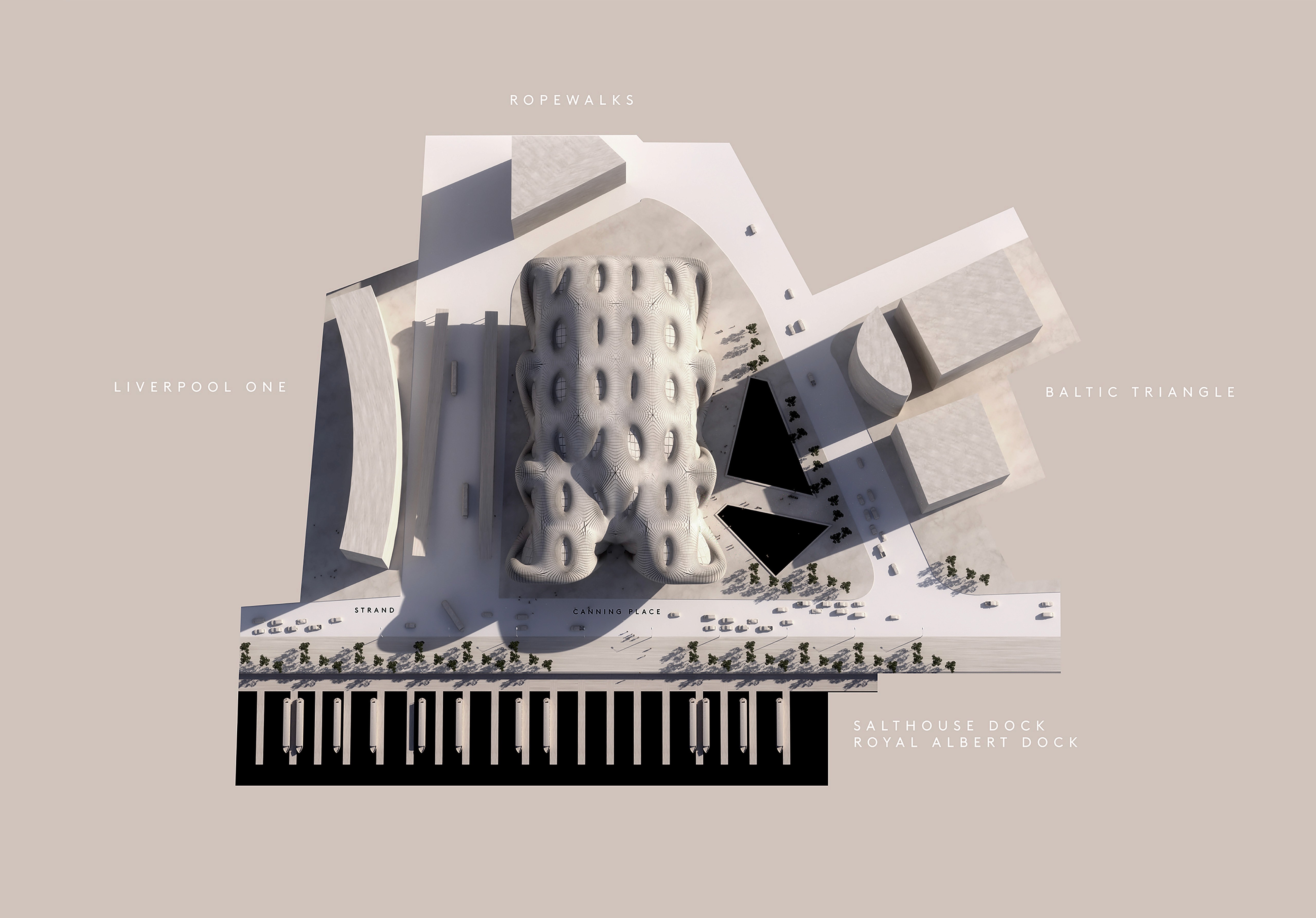
A home for performance, education and innovation
The proposal also establishes a new Liverpool School of Music alongside the English National Opera, creating a direct relationship between professional performance and education. Students, composers, technicians and performers share the same campus, allowing learning and production to exist side by side.
Public workshops, youth programmes, digital media studios and community rehearsal spaces ensure that the building contributes to the city's creative ecosystem while helping develop the next generation of artists and makers.
Architecture shaped by performance
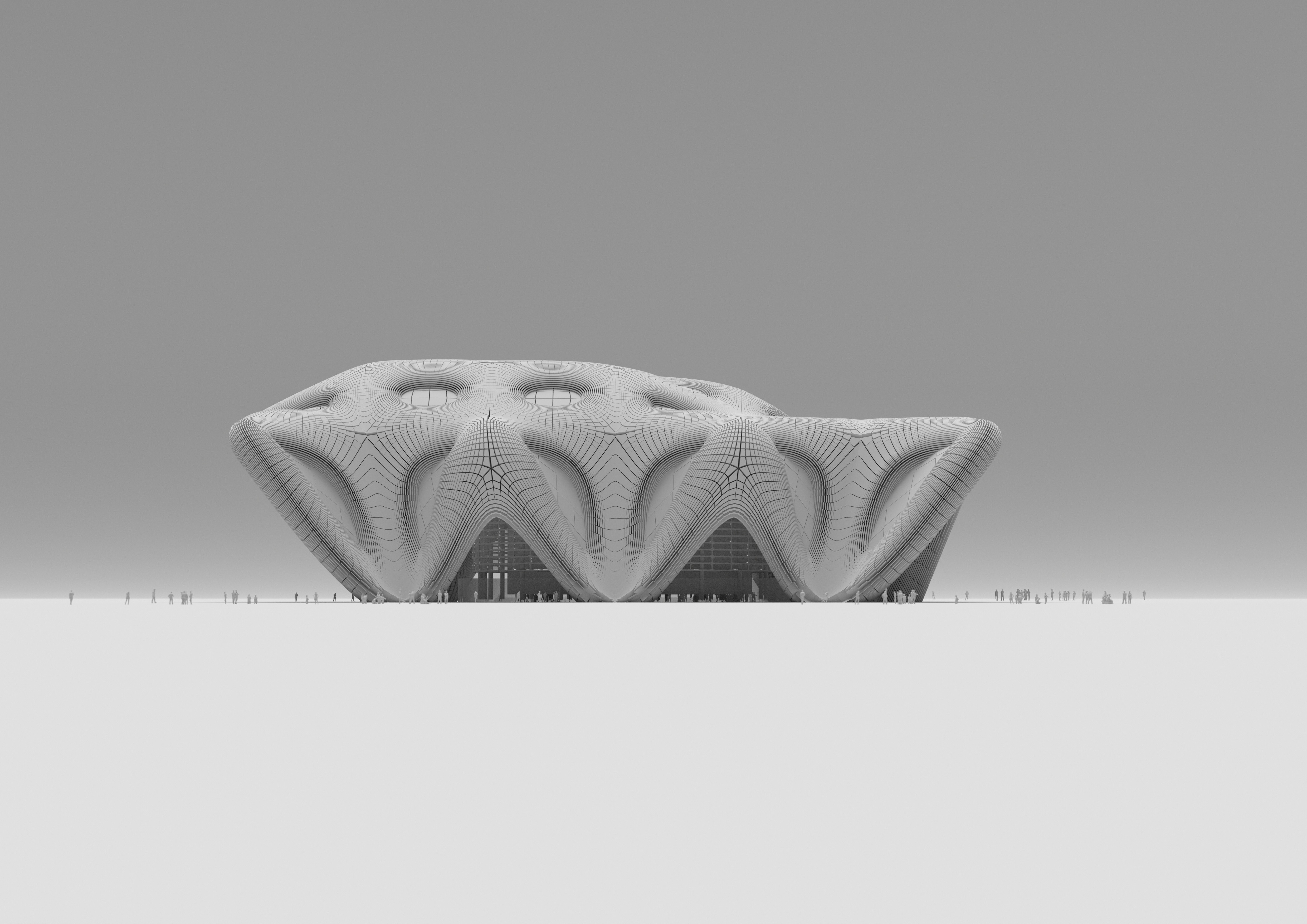
The building's sculptural envelope is inspired by the movement and rhythm of performance itself. A continuous flowing structure wraps the various functions beneath a unified form, creating a recognisable civic identity from every approach to the city.
Large openings admit natural light deep into the interior while framing views towards the waterfront and skyline. By day the building appears calm and monolithic; by night it transforms into a softly illuminated lantern, announcing performances and cultural events to the city beyond.
A catalyst for Liverpool's future
Major cultural institutions have repeatedly transformed the fortunes of cities around the world. Rather than competing with Liverpool's existing cultural assets, EON strengthens them by creating a new destination that encourages visitors to spend longer in the city while supporting local businesses, hospitality and tourism.
Its position between established destinations allows it to become both a gateway and a meeting point—connecting the commercial heart of Liverpool with its historic waterfront and emerging creative districts.
The ambition is not simply to provide a new home for opera, but to create one of Europe's most distinctive cultural buildings: a place where architecture, education, performance and public life combine to reinforce Liverpool's identity as one of the world's great cultural cities.
Suggested programme
The scale of the proposal allows EON to operate as a complete cultural campus rather than a single-purpose venue.
Main English National Opera auditorium
Liverpool School of Music
Flexible theatre and performance space
Public winter garden and civic atrium
Recording and broadcast studios
Exhibition galleries
Education and rehearsal facilities
Creative industry workspaces
Restaurants, cafés and rooftop dining
Public roof terrace overlooking the Mersey
Event and conference facilities
Artist residencies and visiting performer accommodation
SHARE ARTICLE


