The Beacon: Reimagining Liverpool’s revolving tower
March.2026
Read Article
↓
↓

Overview
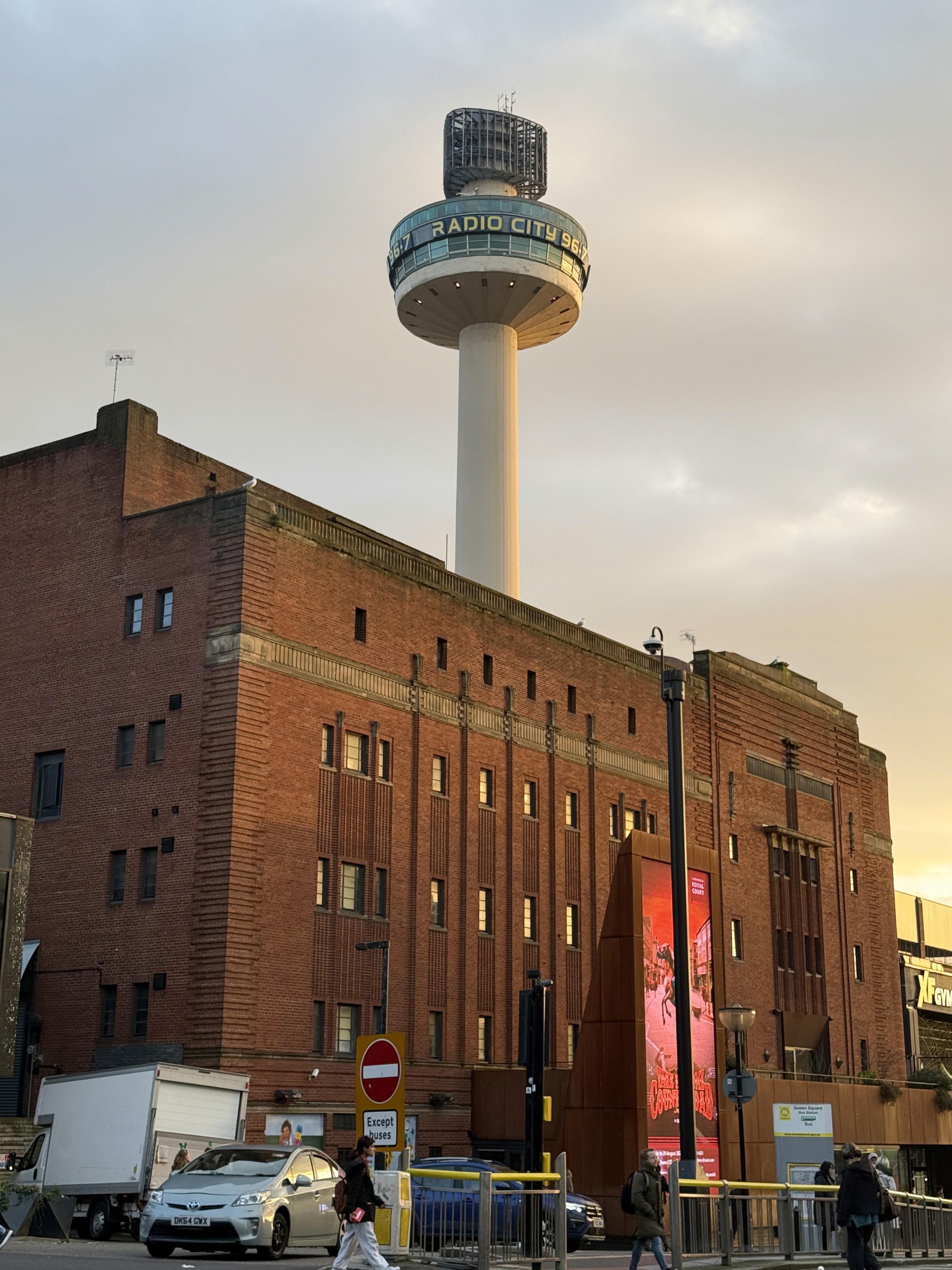
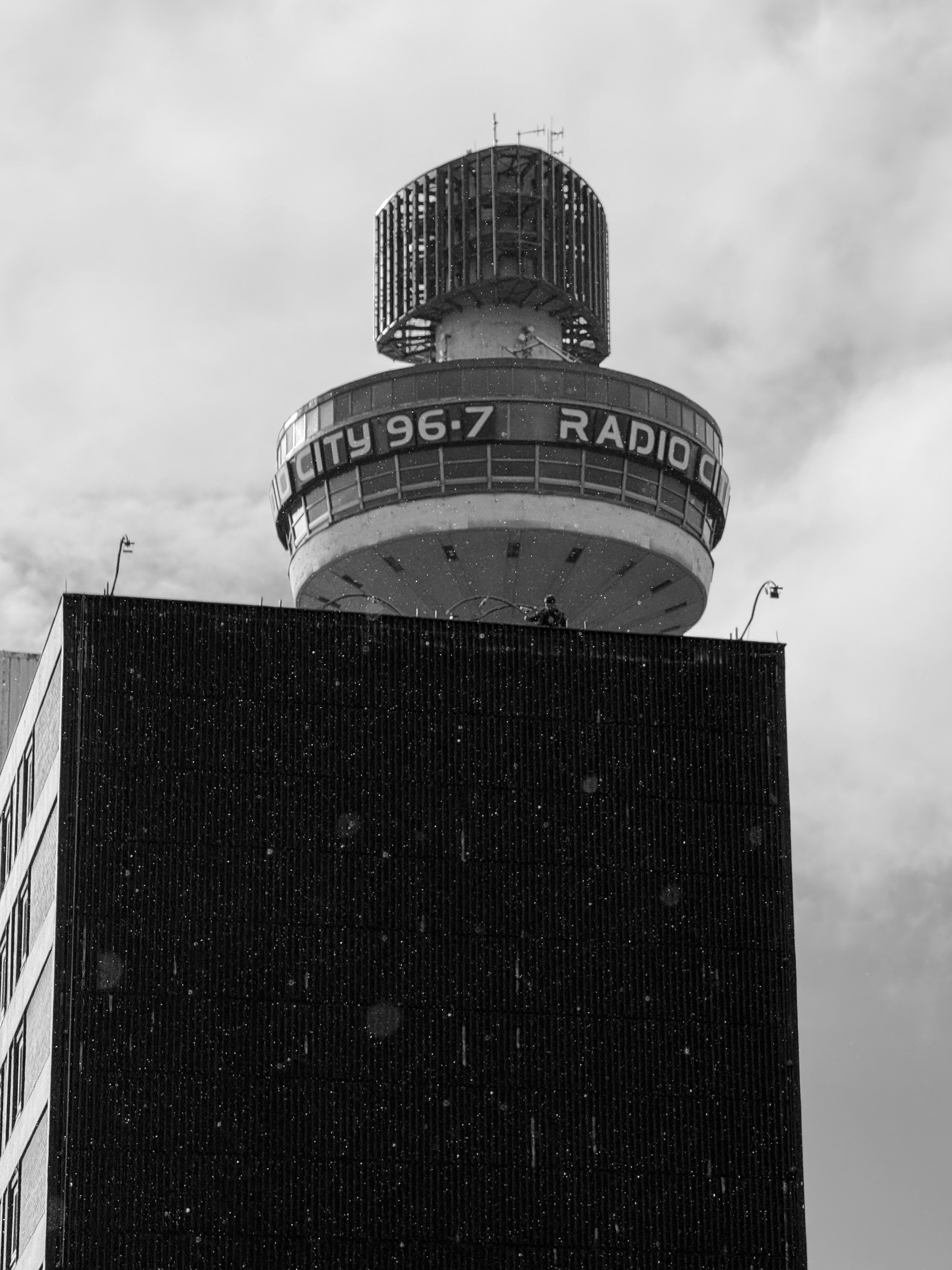
Liverpool’s skyline has long been defined by bold vertical markers. From the Royal Liver Building to the modern towers emerging across the city, these structures act as signals that reflect the spirit and ambitions of their time. St John’s Beacon, completed in 1969 and widely known as the Radio City Tower, was one such symbol. A futuristic broadcasting mast rising above the city centre, it captured the technological optimism of its era and quickly became one of Liverpool’s most recognisable landmarks.
More than half a century later, the tower still commands a powerful presence on the skyline, yet its potential as a civic destination has remained largely untapped. This concept explores how the structure could be reimagined as a contemporary landmark that reconnects the tower with the public while strengthening its role within Liverpool’s evolving skyline.
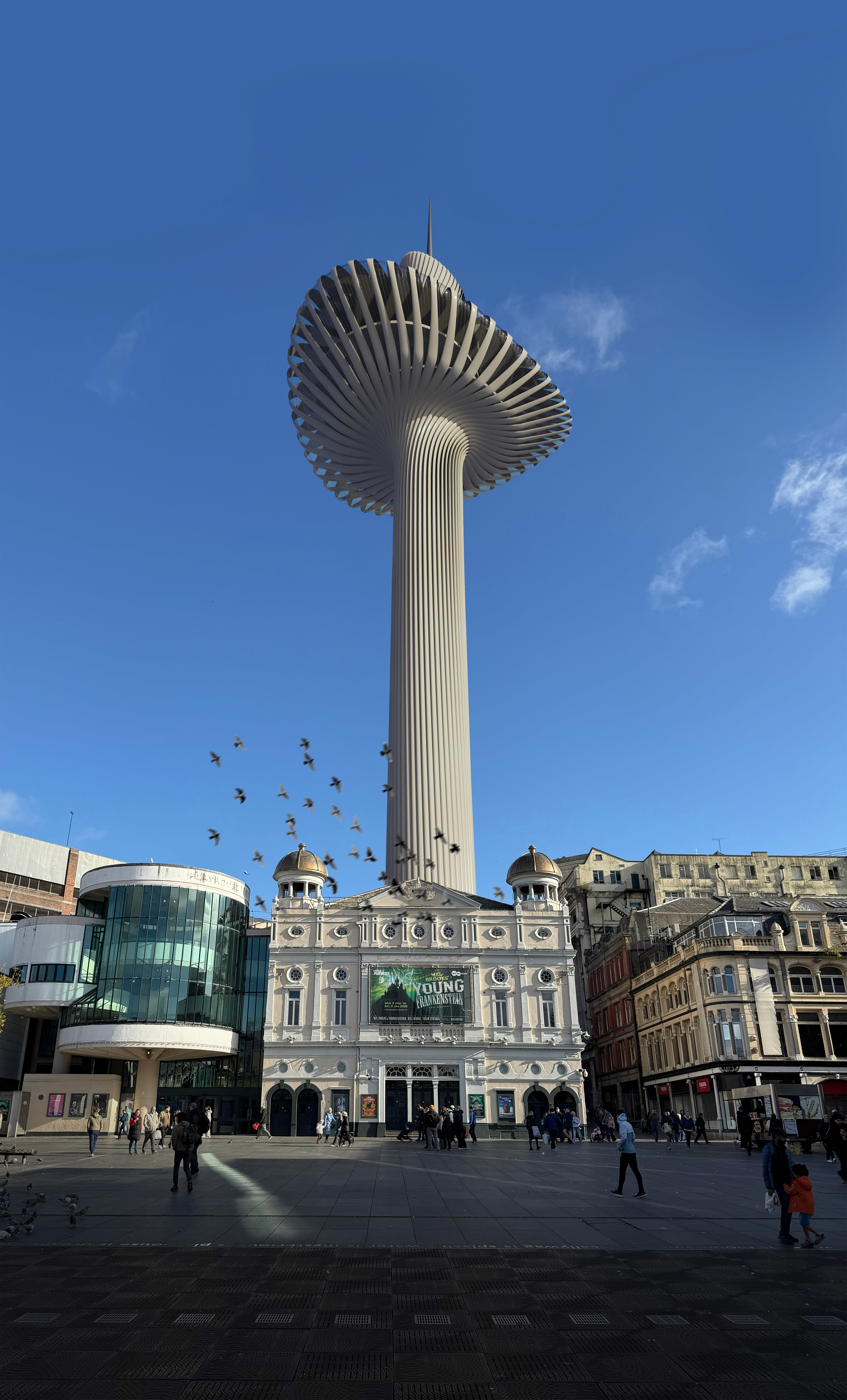
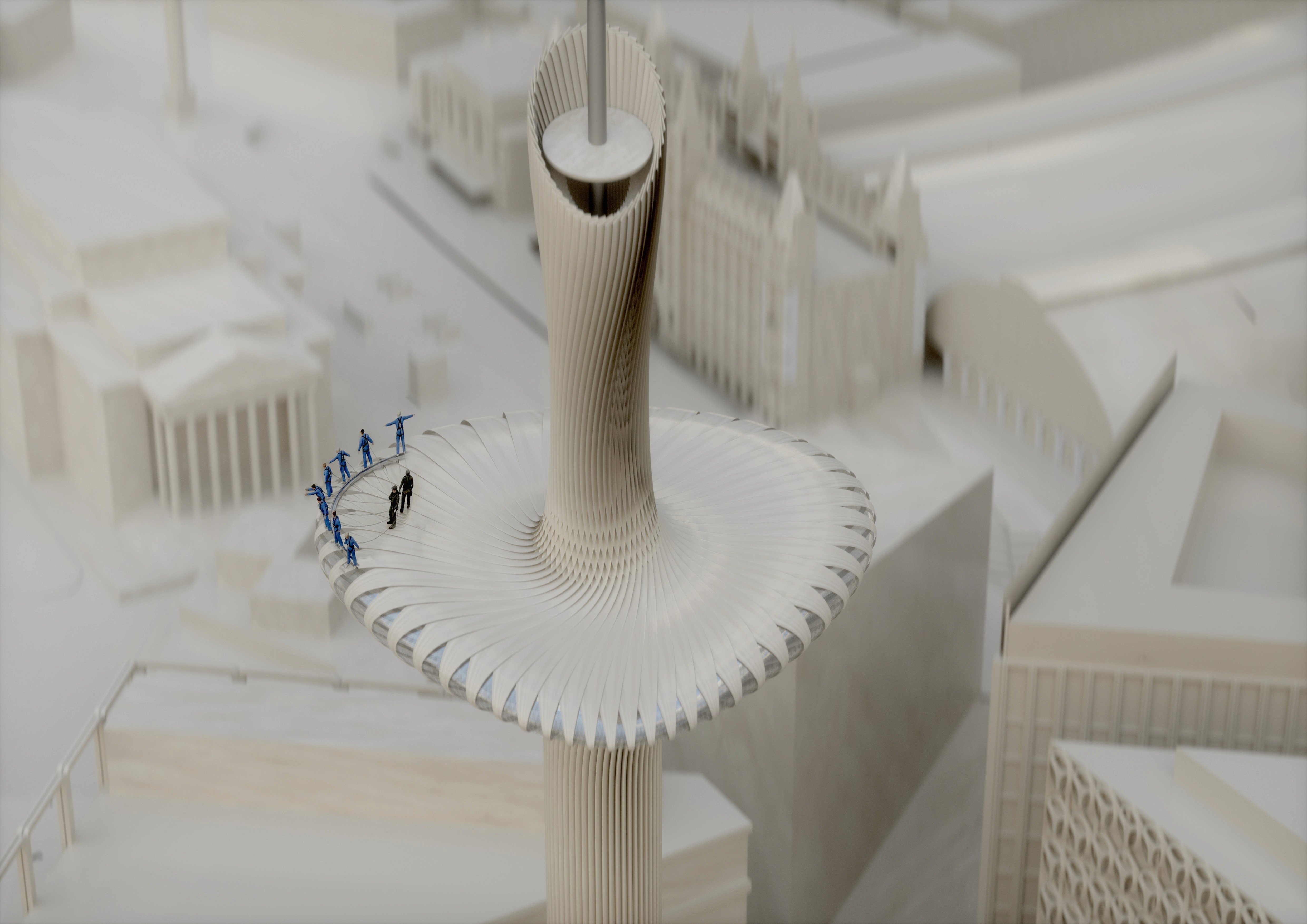
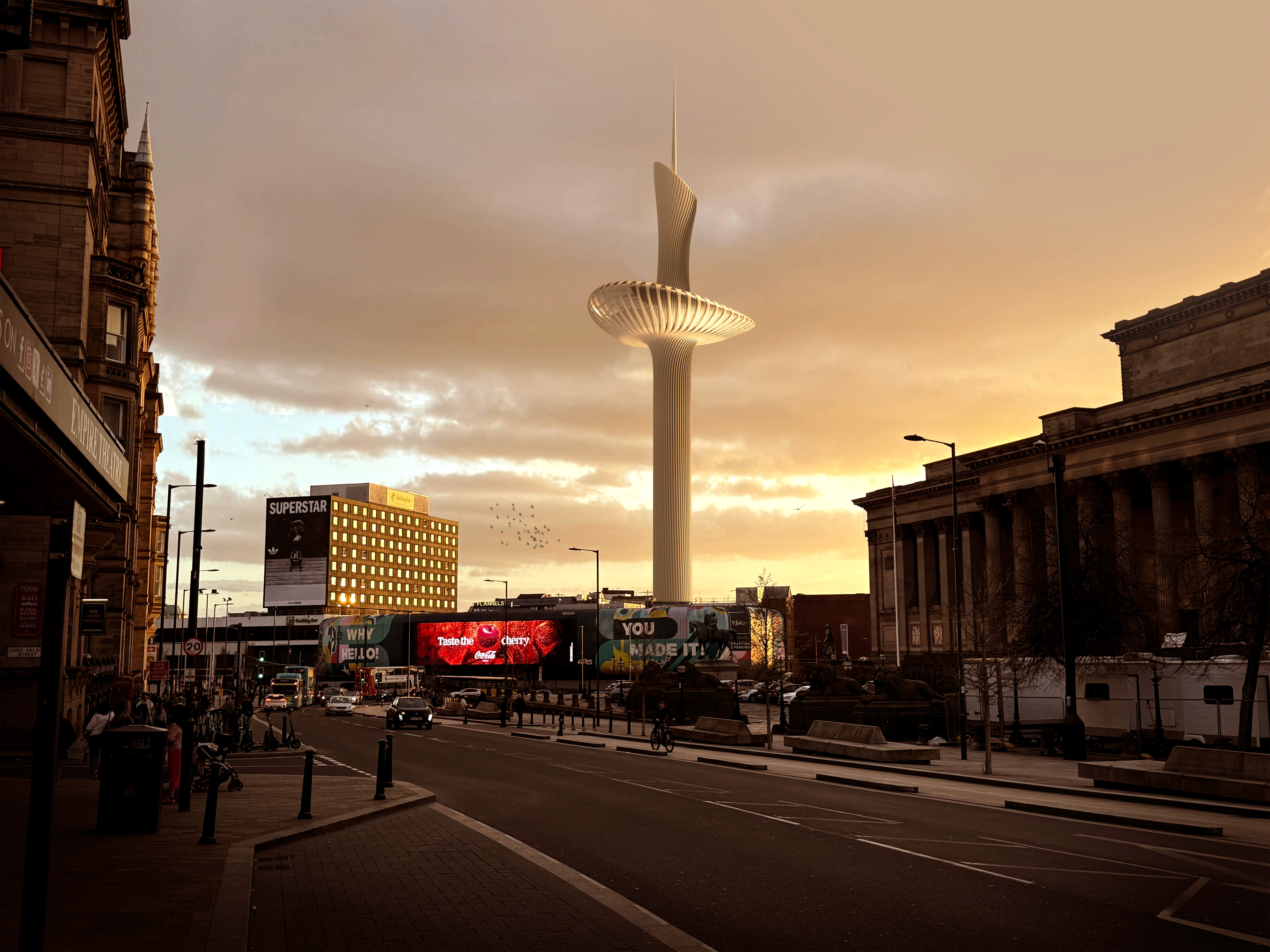
The proposal retains the existing tower and introduces a new sculptural architectural skin that wraps around the original structure. Formed in a pale, mineral-toned ultra high performance concrete, the exoskeleton draws inspiration from the light stone character of Liverpool’s historic waterfront architecture, offering a cooler, more civic expression in contrast to the warmer, beige tones of the city’s neo-classical fabric. The finely ribbed surface recalls carved stone while providing the durability, low porosity, and reduced maintenance required for an exposed structure of this scale. This intervention both celebrates and reinforces the tower’s vertical form, extending it visually while strengthening the original shaft.
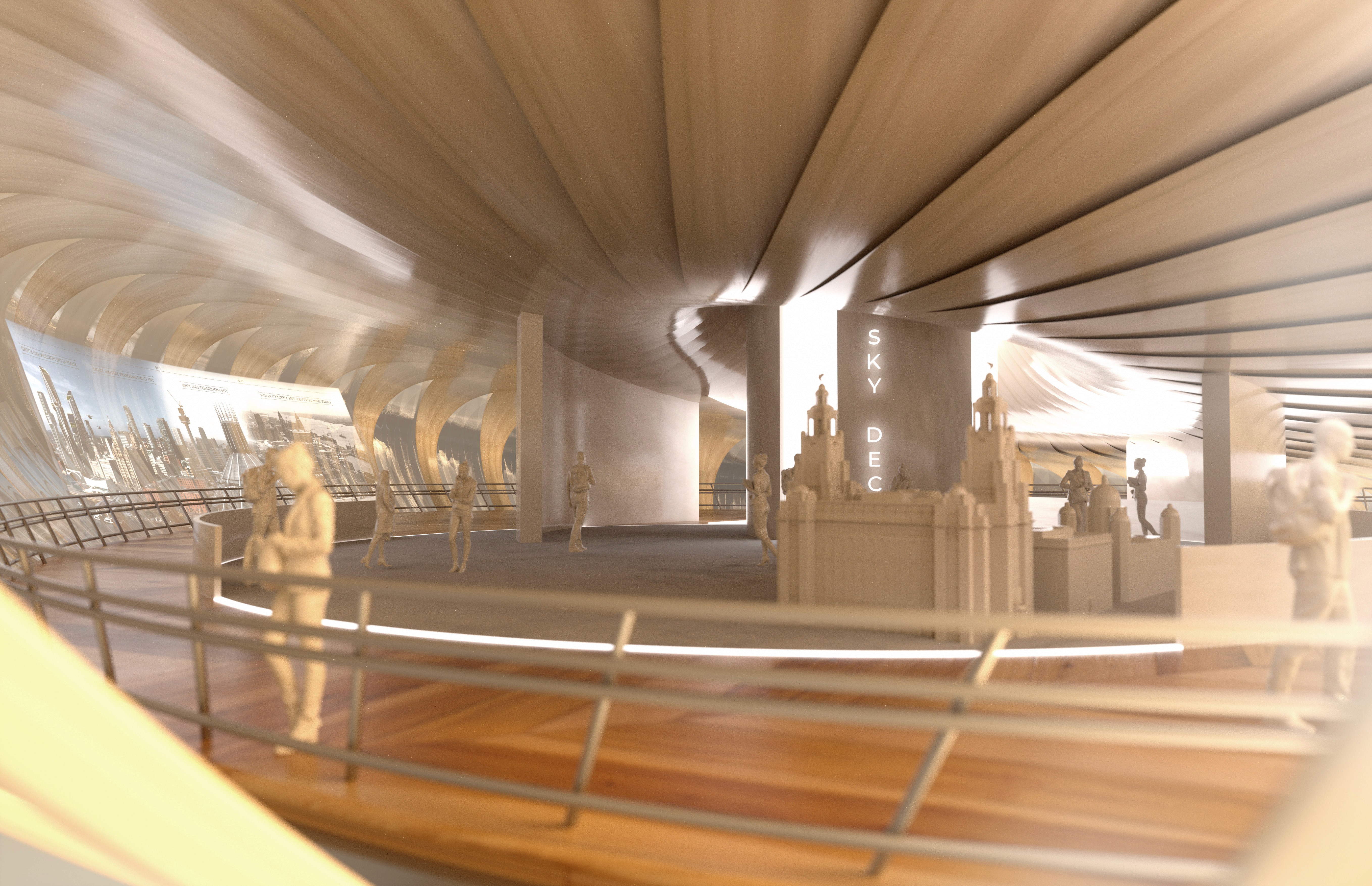
At the centre of the proposal is an expanded circular crown that reinterprets the tower’s historic viewing platform. The new form creates a larger panoramic observation level suspended above the city, where visitors can experience sweeping views across Liverpool, the Mersey, and the surrounding landscape. The crown also accommodates social and cultural activity, transforming the tower from a purely functional broadcast structure into a destination for visitors and residents alike.
Encircling the crown, a rooftop experience allows visitors to step outside and move along the structure itself while safely harnessed. This elevated promenade offers a direct and immersive way to engage with Liverpool’s skyline, creating a physical connection to the height and openness of the tower.
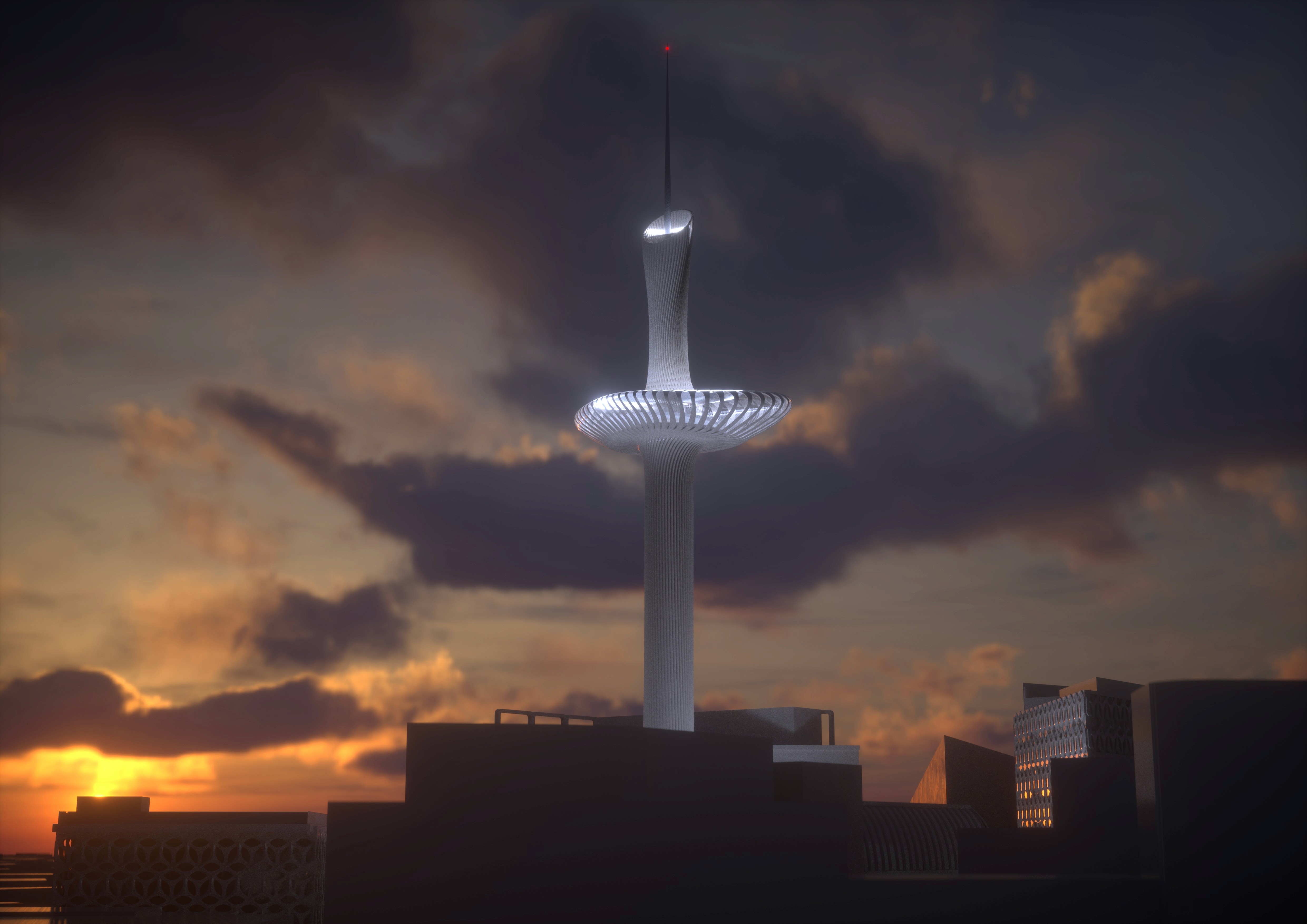
Above, the structure narrows into a twisting spire that culminates in a compact glass viewing capsule positioned at the highest accessible point. From here, the city unfolds in every direction, reinforcing the tower’s role as a true beacon within Liverpool’s urban landscape.
At night, the architecture glows softly, transforming the tower into a luminous marker visible across the city and along the Mersey. The structure shifts from a relic of broadcasting infrastructure into a civic signal and point of orientation within the skyline, reflecting Liverpool’s continuing ambition and creativity.
Rather than replacing St John’s Beacon, the project celebrates its legacy while imagining how the tower could serve a new generation. It asks a simple question. What if Liverpool’s most familiar tower could once again become one of its most compelling destinations.


SHARE ARTICLE