Left Bank
June.2026
Read Article
↓
↓


Overview
Left Bank
What if Birkenhead's waterfront became one of the defining civic destinations of the North West?
Left Bank is a speculative regeneration proposal that reimagines Woodside as a contemporary cultural district centred around a new civic landmark. Positioned on one of Britain's most extraordinary waterfronts, the project explores how architecture, public space and cultural programming could transform an underused gateway into a destination that belongs not only to Birkenhead, but to the wider Liverpool City Region.
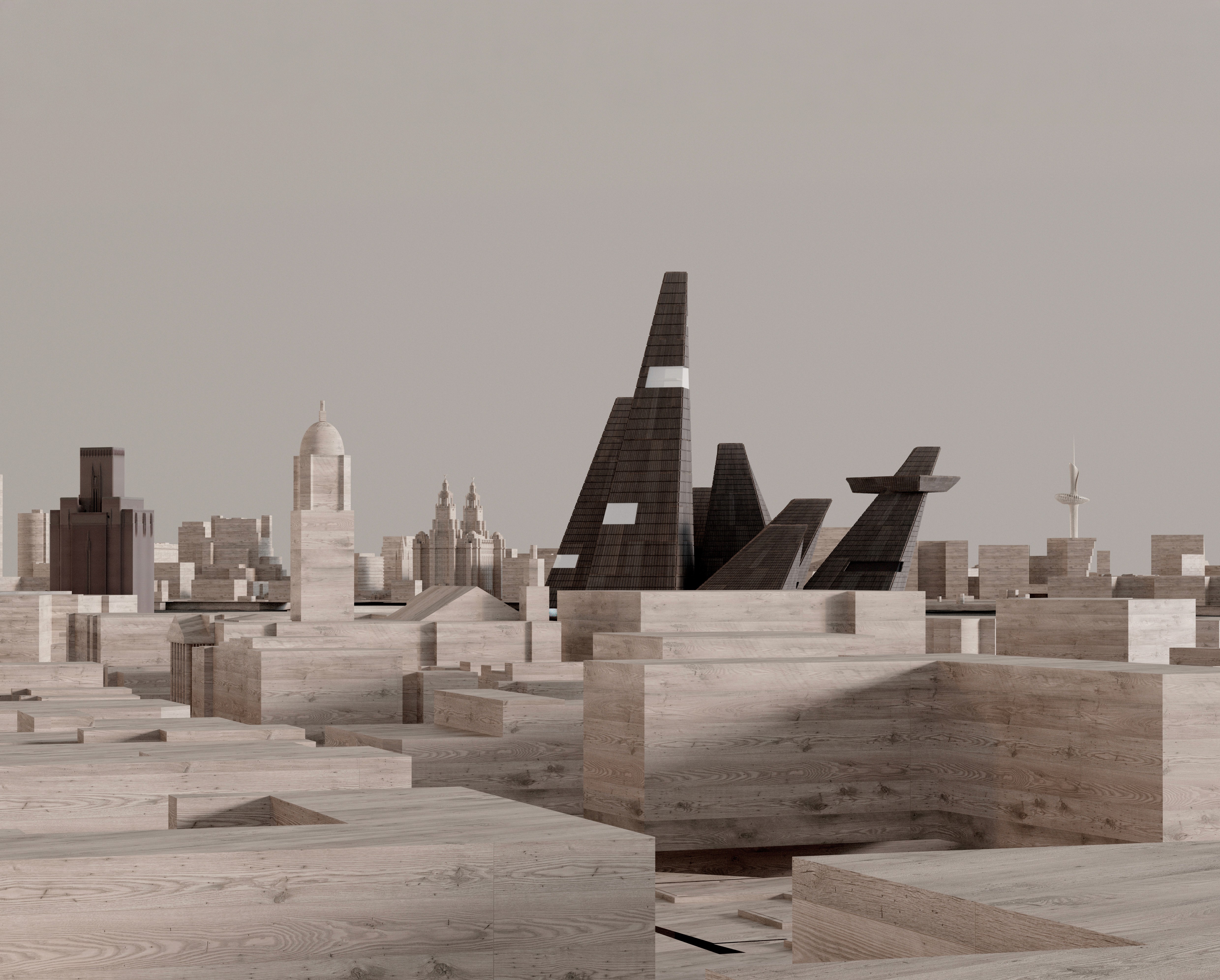
Rather than competing with Liverpool's skyline, the proposal celebrates it. A sculptural beacon anchors the waterfront, creating a new point of arrival while reconnecting the town with the River Mersey through generous public space, exhibitions, events and everyday activity. The project asks a broader question: how can bold civic architecture restore confidence, attract investment and redefine the identity of a place?
Left Bank is not a masterplan. It is an exploration of what becomes possible when ambitious spatial thinking is applied to places that already possess remarkable history, infrastructure and untapped potential.
Context
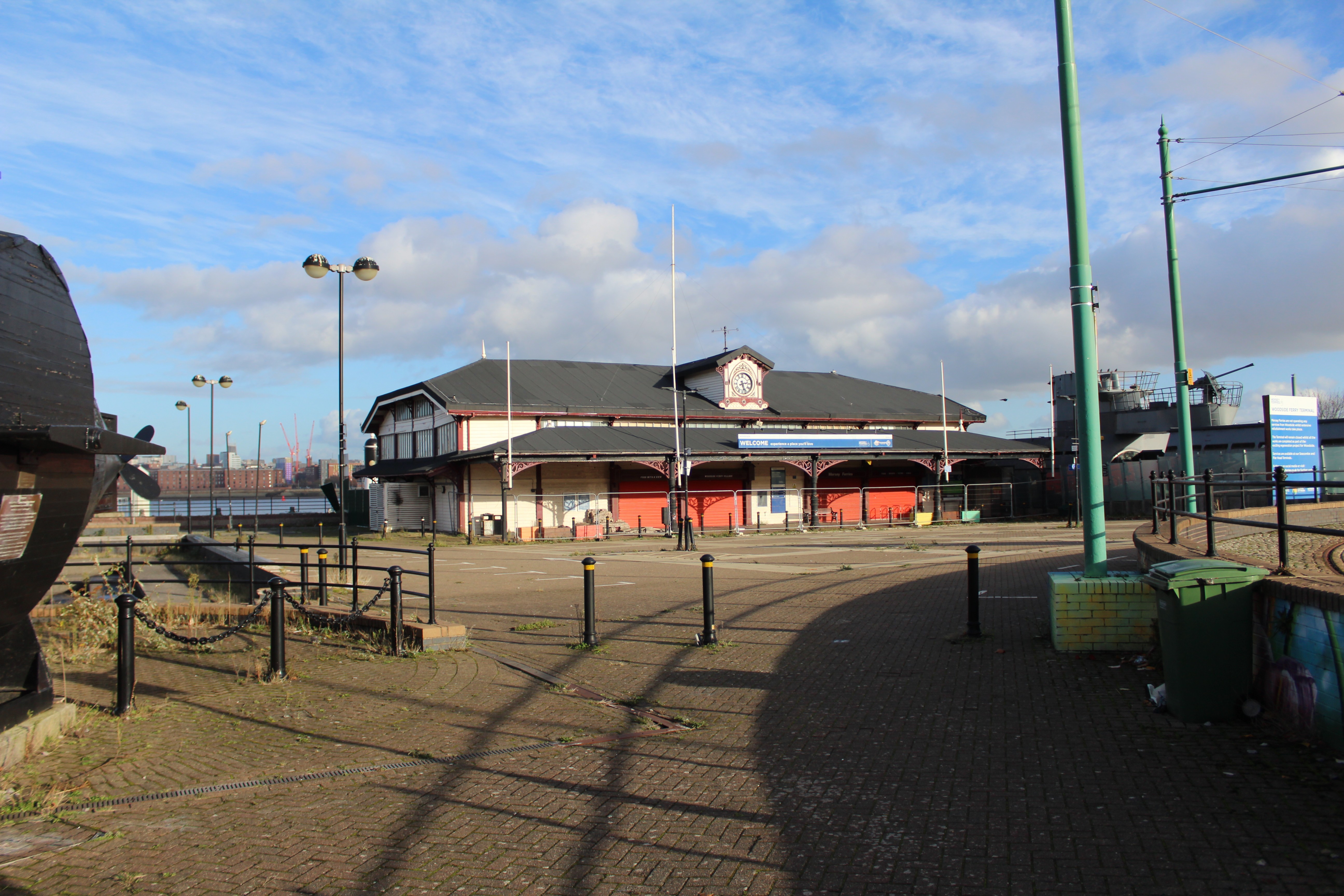
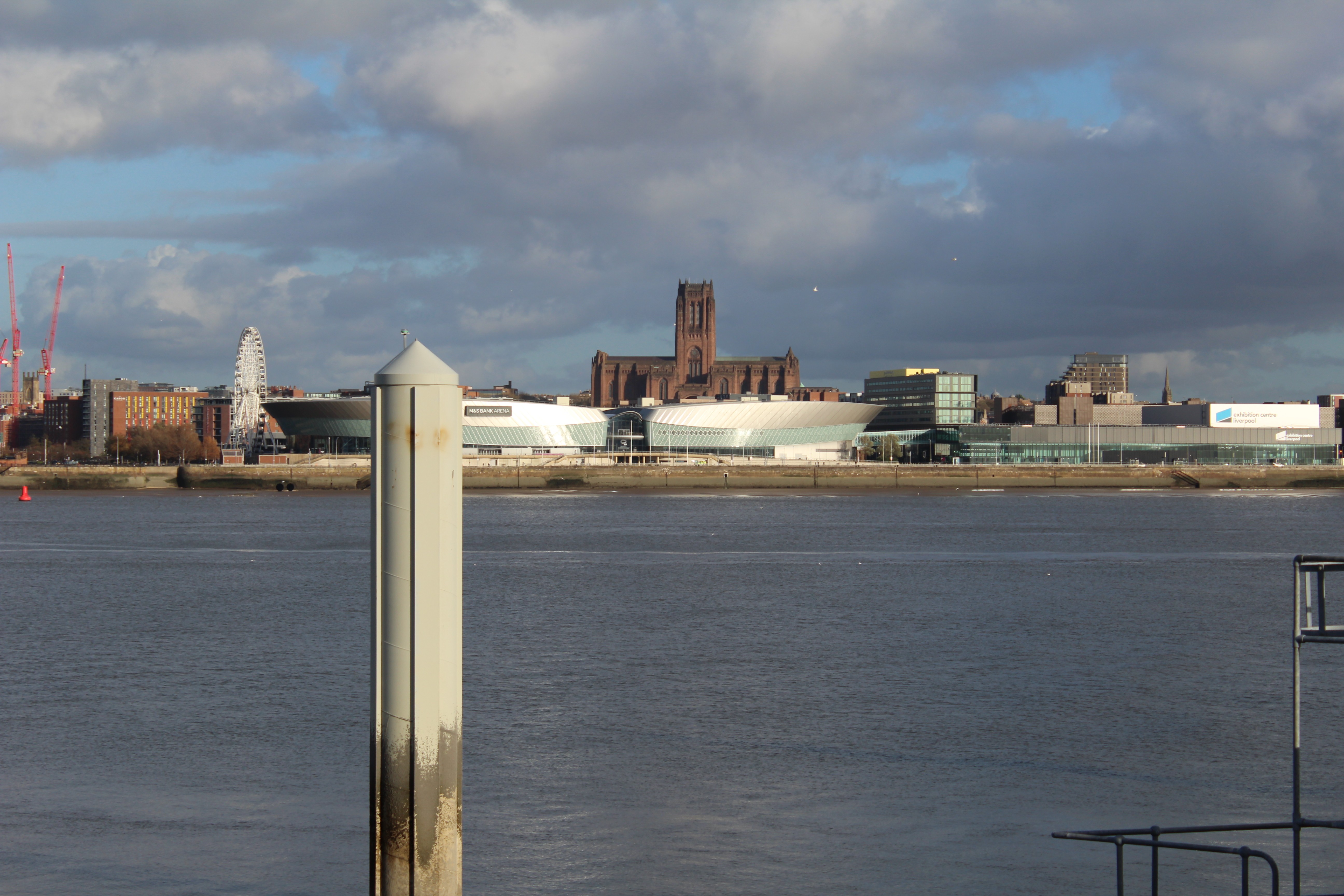
Few places in Britain possess the geographic advantages of Birkenhead. Sitting directly opposite Liverpool's internationally recognised waterfront, the town is connected by rail, road, ferry and active travel routes, placing millions of people within easy reach. Hamilton Square station, the Mersey Tunnels, the Mersey Ferry, the M53 motorway and the wider Liverpool City Region transport network make the waterfront one of the most accessible locations in the North West.
Yet in 2026, this remarkable connectivity is not reflected in the experience of the place. While Liverpool's waterfront attracts international visitors, investment and cultural activity, Woodside and much of Birkenhead town centre remain largely disconnected from that energy. Despite enjoying one of the country's most dramatic urban backdrops, the Left Bank rarely feels like an active participant in the wider story unfolding across the river.
Significant regeneration is already underway. Public investment is improving the route between Hamilton Square and Woodside, the ferry terminal is being renewed, public spaces are being redesigned and cultural organisations are beginning to establish a stronger presence. Together, these projects represent an important foundation for the future, but they also highlight a broader opportunity: creating a destination capable of changing how people perceive, experience and spend time in Birkenhead.
Left Bank begins from that premise. Rather than asking how the waterfront can simply be improved, it asks how a single civic intervention could reshape the identity of the Left Bank itself - creating a landmark, a meeting place and a cultural destination that encourages people to cross the river not simply because they can, but because they want to.

Materiality & Form
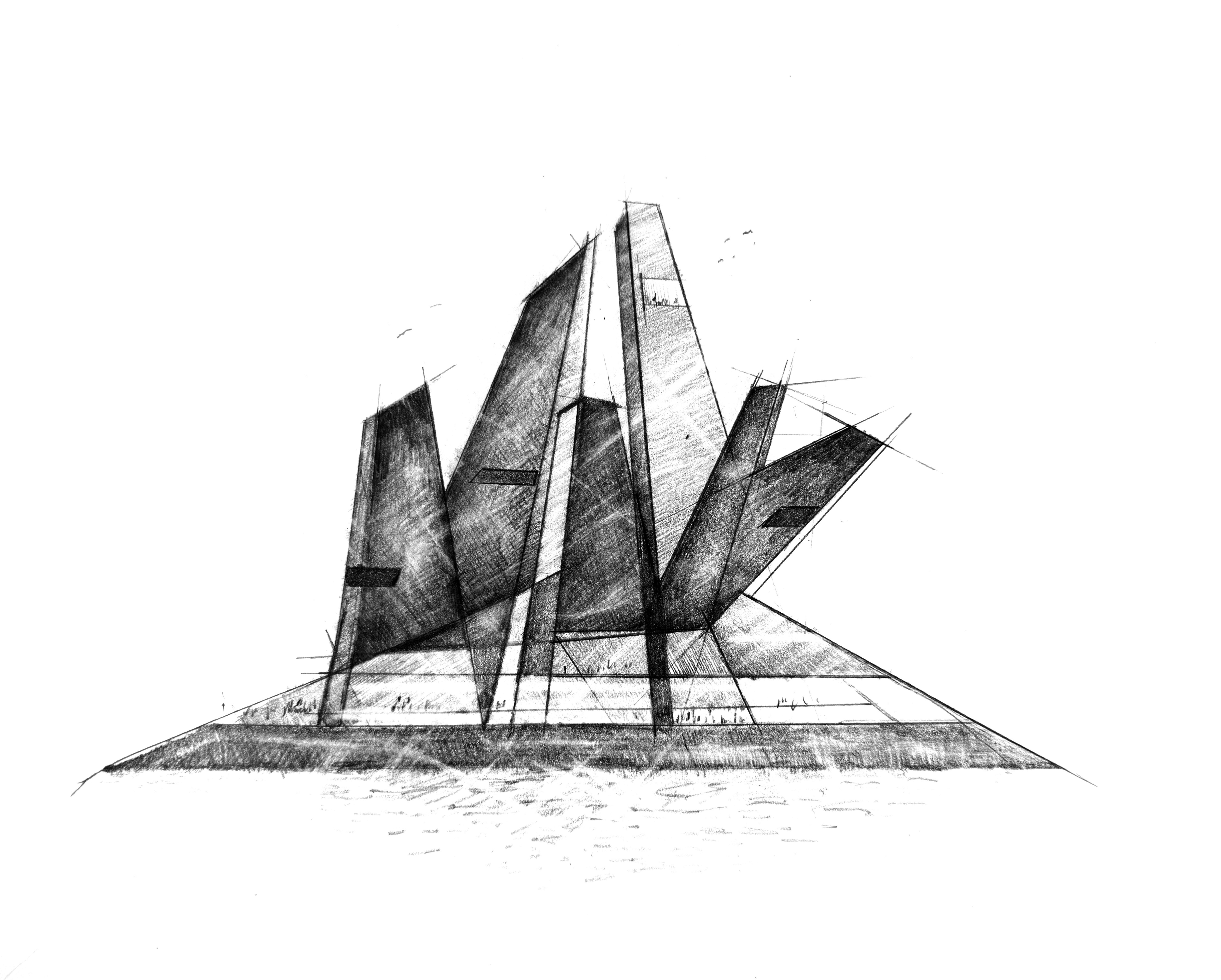
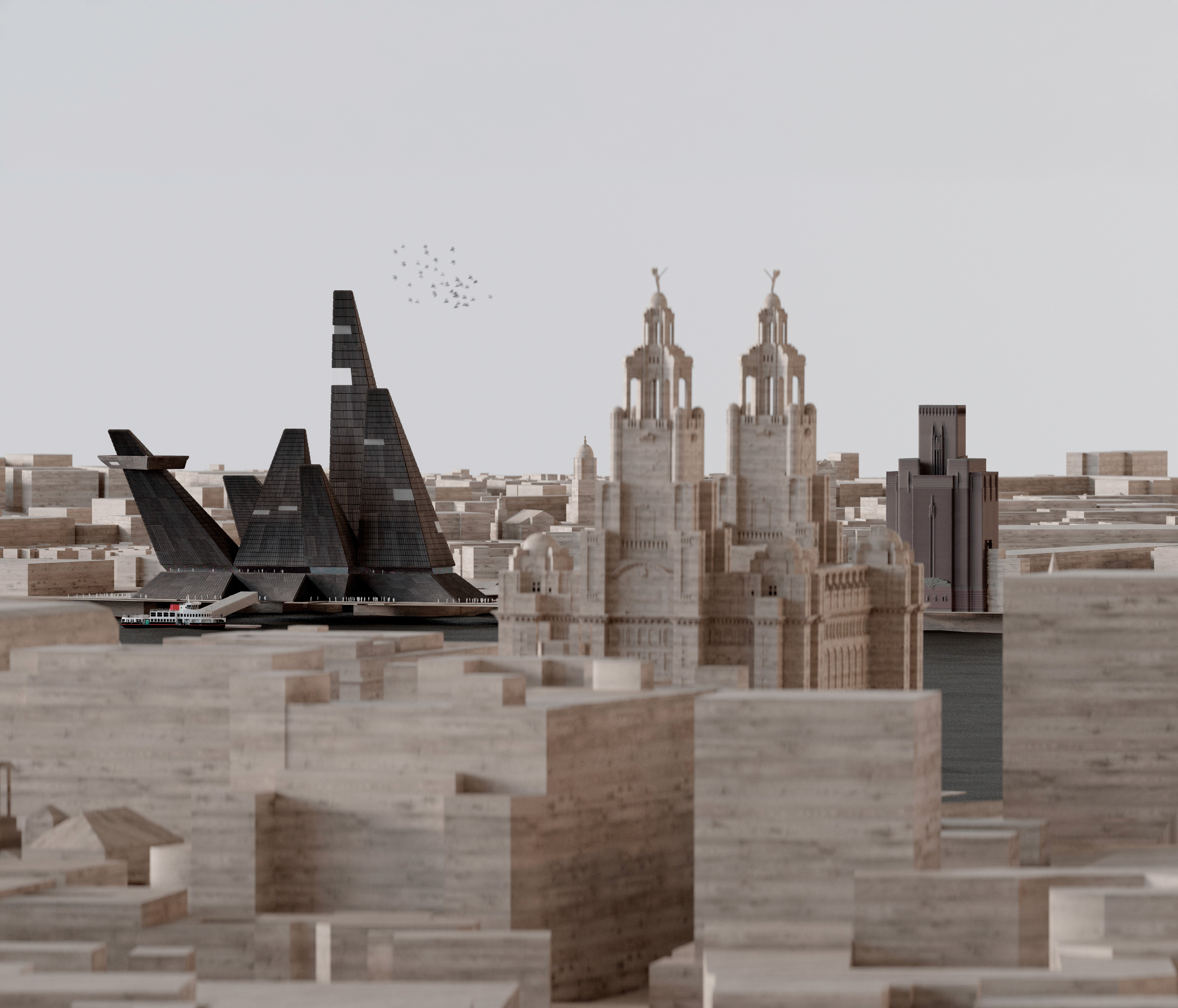
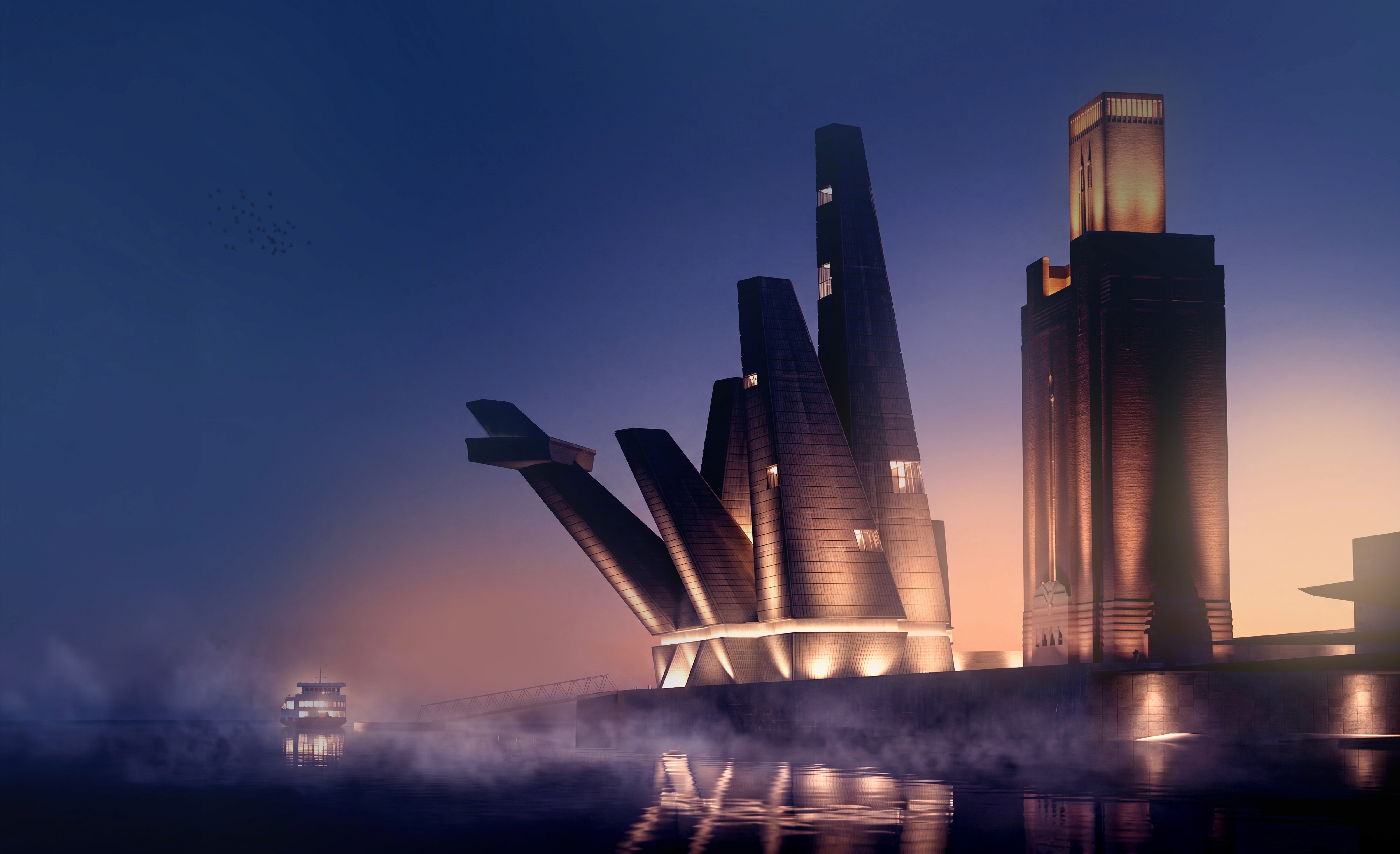
Left Bank is conceived as a permanent civic landmark; a building that feels as though it has always belonged to the Mersey waterfront while expressing confidence in Birkenhead's future. Its sculptural massing draws inspiration from the solidity and permanence of monumental civic architecture, taking cues from projects such as the Tate Modern extension, where weight, texture and silhouette become the architecture rather than applied ornament.
The primary structure is envisioned as a reinforced concrete frame clad in large-format precast concrete panels, pigmented with locally appropriate mineral aggregates to produce a rich warm brown tone. Rather than competing with Liverpool's brighter Portland stone skyline, the building embraces the deeper browns, ochres and weathered concrete that characterise Birkenhead's industrial heritage. The colour palette references landmarks such as the Queensway Tunnel ventilation tower and the robust dockside infrastructure that has defined the Left Bank for generations, allowing the building to feel rooted within its surroundings despite its contemporary form.
Openings are deliberately sparse. Instead of conventional curtain walling, deep punched apertures are carved into the monolithic facade, reinforcing the perception of mass while creating moments of light within the solid envelope. These windows become carefully composed viewing devices. Looking east, they frame the Liverpool waterfront as a sequence of cinematic vistas across the Mersey. Looking west, they capture expansive views across the Wirral peninsula, the changing estuary and distant landscapes beyond. The depth of each opening creates changing shadows throughout the day, giving every window the presence of an inhabited threshold rather than simply an opening in the wall.
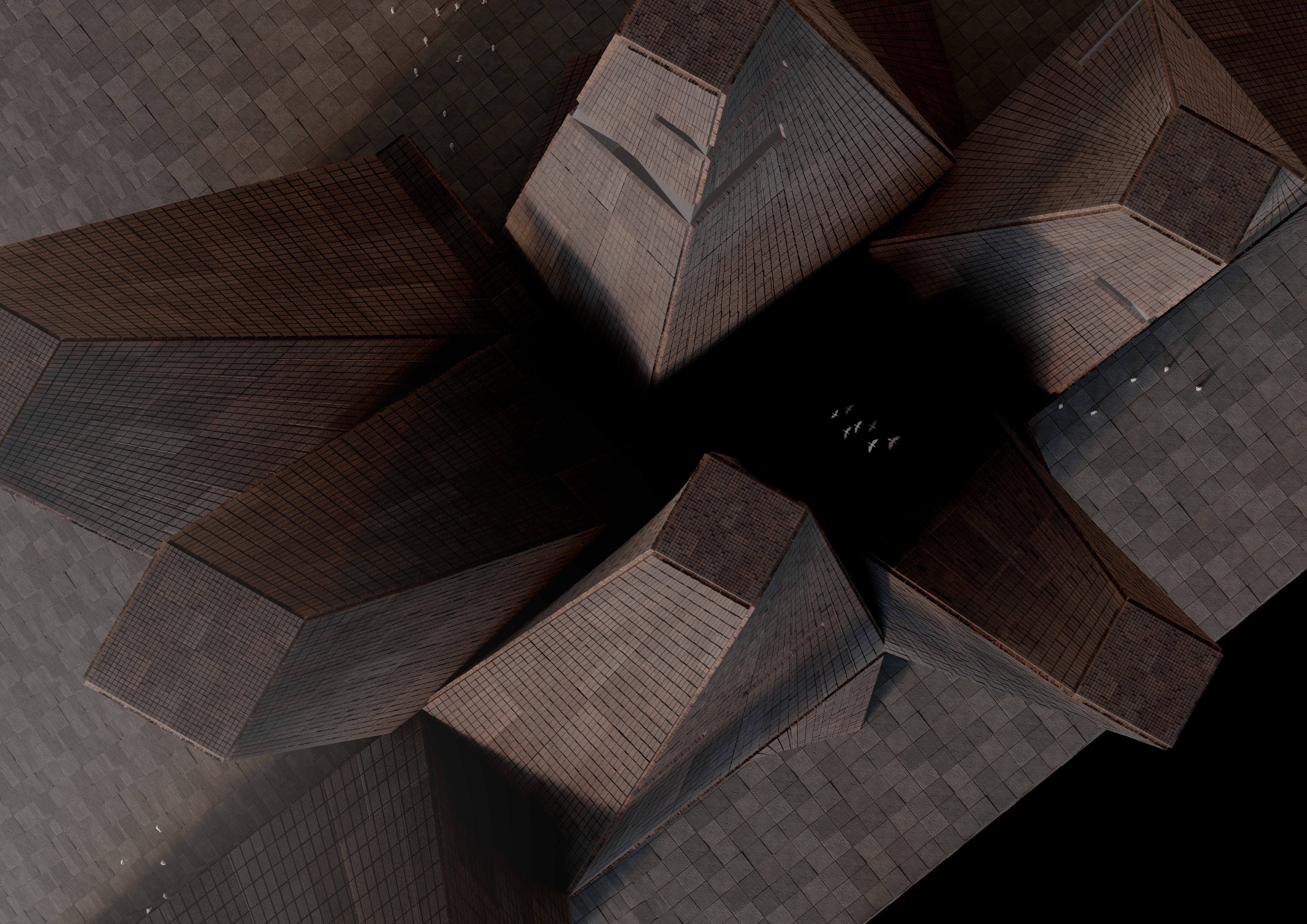
The building's distinctive leaning volumes extend dramatically towards the river, their cantilevered forms recalling the industrial language of Birkenhead's shipbuilding heritage. From some viewpoints they suggest the profile of dockside cranes reaching over the water; from others they evoke the abstract geometry of ships' bows or wind-filled sails emerging from the waterfront. This deliberate ambiguity allows the architecture to acknowledge the site's maritime history without resorting to literal references. The result is a civic building that is unmistakably contemporary, yet inseparable from the identity of the Mersey.
Despite its expressive silhouette, the architecture is intentionally restrained. Ornament is replaced by proportion, material and light. The building derives its character from the interaction between solid and void, shadow and reflection, creating a landmark whose presence is defined as much by what has been removed as by what has been built.


Programme
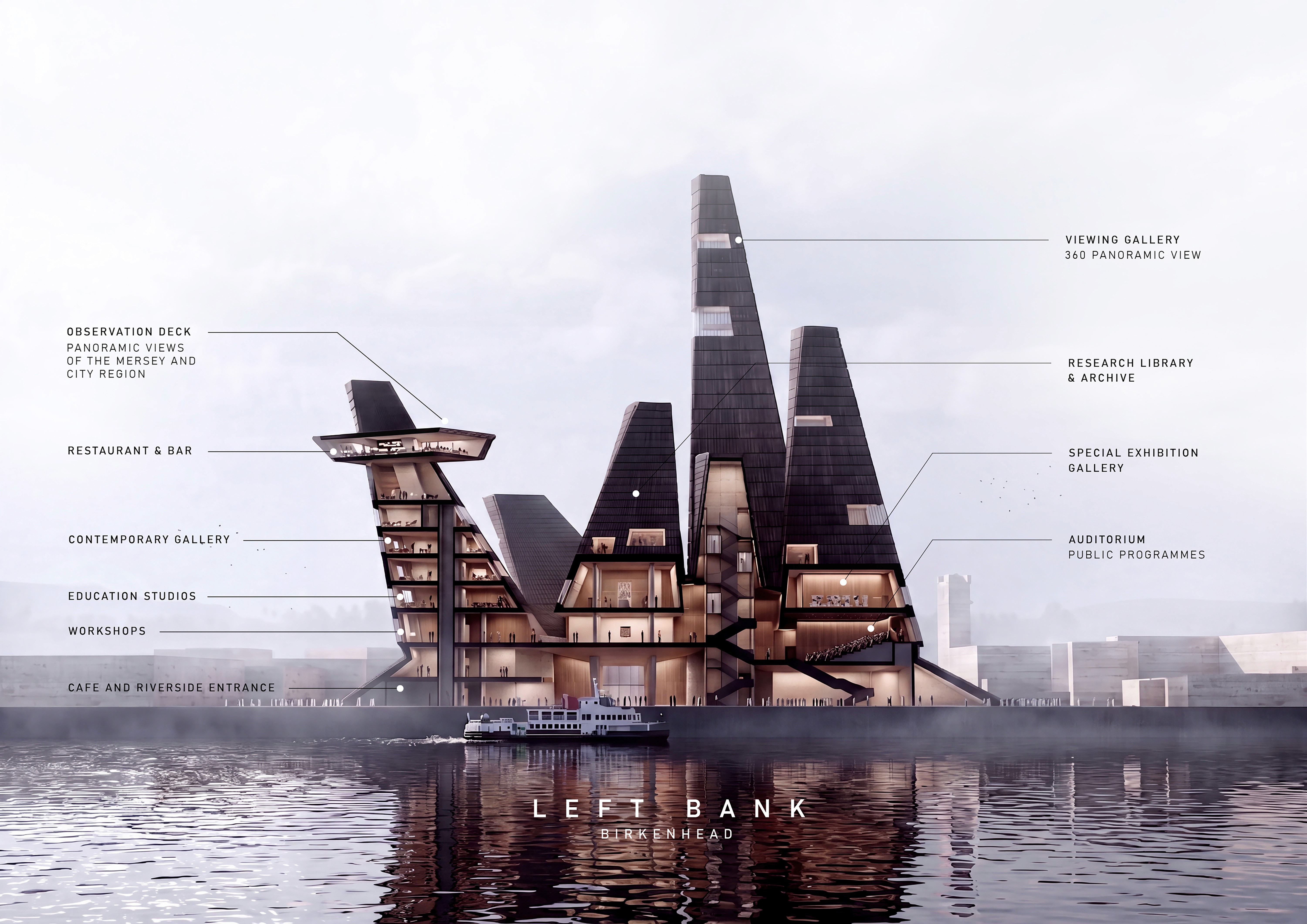
Left Bank is conceived as a cultural and civic destination designed to remain active throughout the day and into the evening. Rather than serving a single purpose, the building brings together exhibition, education, performance and public life within a sequence of interconnected spaces that encourage exploration and discovery.
Visitors arrive through a generous waterfront foyer before moving upwards through galleries, bridges and public terraces that reveal new perspectives across the building and the River Mersey. Temporary exhibitions, permanent collections and immersive installations sit alongside workshops, artist studios, educational spaces and research facilities, allowing the building to support both cultural production and public engagement.
Higher levels accommodate quieter programmes, including a research library, archive and reading rooms, culminating in a panoramic viewing gallery offering uninterrupted views across Liverpool, the Mersey Estuary and the Wirral peninsula. Throughout the building, cafés, restaurants and informal gathering spaces encourage visitors to linger, transforming the architecture into a place for everyday life as much as special occasions.
A flexible auditorium and civic forum provide space for lectures, performances, debates, screenings and community events, ensuring the building continues to evolve with the city it serves. Together, these programmes create a destination that is active from morning until late evening, a building that celebrates culture, encourages learning and establishes the Left Bank as a place of encounter rather than simply a place of arrival.
Impact
Architecture alone cannot regenerate a town, but it can redefine how that town is perceived.
Left Bank is conceived as a civic catalyst rather than an isolated building. Its role extends beyond providing exhibition space or public amenities; it seeks to establish a new identity for Birkenhead's waterfront and, in doing so, encourage renewed confidence in the wider town centre. By creating a destination with genuine architectural presence, the project has the potential to attract new visitors, support local businesses and strengthen the cultural relationship between both sides of the Mersey.
Positioned at the point where millions of journeys converge each year, the building becomes both gateway and landmark. For ferry passengers it forms a memorable arrival experience. For rail and road users it announces Birkenhead as a destination rather than simply the city opposite Liverpool. For residents it provides a permanent civic space capable of hosting exhibitions, public debate, performances, education and everyday life throughout the year.
The ambition is not to compete with Liverpool, but to complete the waterfront story. Together, the two riverbanks have the opportunity to form one of Europe's most compelling urban waterfronts, each with its own distinct identity, character and purpose. Where Liverpool celebrates its mercantile and civic grandeur, Left Bank proposes a contemporary cultural beacon rooted in Birkenhead's industrial heritage and looking confidently towards its future.
Ultimately, the project asks a broader question that extends far beyond the Wirral.
How can architecture become a catalyst for changing perception?
Not through scale alone, but through confidence. Through creating places that people choose to visit, spend time within and identify with. Left Bank is an exploration of that possibility - a speculative vision for how a single civic intervention might help reconnect a town with its waterfront, its identity and its future.

SHARE ARTICLE


